Nukkad Naatak (2026): A Sincere Drama That Deserves More Polish


Two best friends, caught stealing from the college canteen, are handed an ultimatum that forces them into the messiest, most human corners of a slum community. Director Tanmaya Shekhar’s Nukkad Naatak wears its good intentions openly, sometimes too openly, and that honesty is both its greatest strength and its most visible liability.
Shivang Rajpal Earns Every Quiet Moment He Gets
Shivang Rajpal is the film’s most dependable presence. In scenes where his character wrestles with internal conflict, he never reaches for easy expression. The performance is restrained, considered, and effective nearly every time the film asks something real of him.
I found myself wishing the screenplay gave him more of those moments, because he consistently makes them count.
Tanmaya Shekhar Directs With Purpose but Stumbles Technically
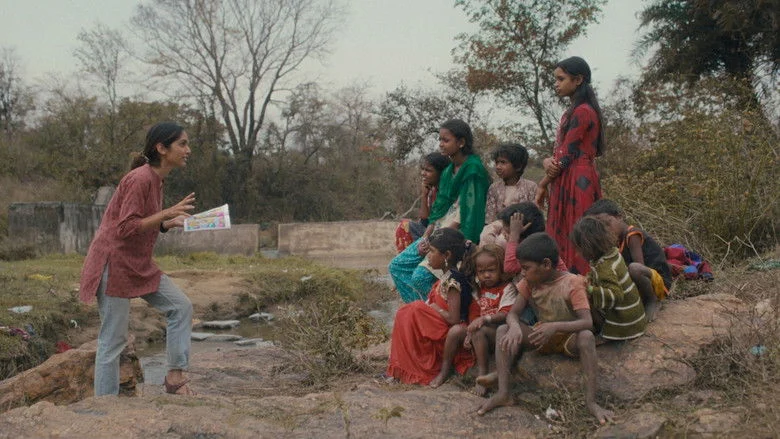
Shekhar’s direction carries a clear moral compass. The central premise, two expelled college students must enroll five slum children into school to win reinstatement, is handled with genuine conviction. That sense of purpose keeps the film moving even when the writing thins out.
The strength is in the film’s sincere engagement with why education access matters. Shekhar doesn’t preach so much as observe, and that restraint is appreciated.
But technical flaws are difficult to overlook. Whether in continuity, craft, or production finish, the rough edges accumulate. For a story this grounded, the execution needed to be sharper.
A Drama About Children That Finds Its Soul in Small Moments
The drama genre lives or dies on whether you believe the people on screen. Nukkad Naatak builds its emotional case gradually, centred on the relationship between two young adults and the five children whose futures hang in the balance. When the film slows down and watches its characters rather than directing them, something genuine emerges.
The dialogue occasionally gestures toward complexity, There are always three sides to a story: The Teacher’s version, is one such moment that hints at a richer film underneath. But the screenplay rarely follows through on those openings with enough structural rigour.
The slum setting is the film’s most evocative choice. It grounds what could have been a breezy redemption arc in something with actual social texture. That grounding saves the film from feeling merely decorative in its concern for the underprivileged.
If you enjoy Hindi drama reviews that engage with small, sincere filmmaking, Hindi Drama reviews on this site cover a wide range of the genre’s recent entries.
Molshri Holds the Film’s Emotional Centre Together
Molshri, also a producer on the film, plays the lead with a rebellious energy that the story flags early, The first thing I noticed about Molshri was her rebellious nature, the film announces. She delivers in the emotional scenes, where the performance strips back the surface confidence to reveal something more vulnerable.
Danish Husain is listed as the antagonist, but the research available offers little on how his presence shapes the second half. What can be said is that casting someone of his calibre in opposition to the leads suggests the film understood what dramatic friction requires.
No Controversy, But the Audience Question Remains Open
Nukkad Naatak arrives without political controversy or censorship battles. It is, at its core, a quiet film about education, friendship, and community responsibility. Whether audiences seeking that kind of earnest drama will find it, in a market that rarely rewards low-decibel sincerity, is the more pressing question.
The production house, How To Enter Bollywood, positions this as an independently driven project with limited mainstream infrastructure. That context matters when assessing the film’s ambitions against its execution.
This is the kind of film where you sense real commitment from the people who made it. That doesn’t always translate into a polished product, but it does translate into something worth noticing.
If the redemption-through-social-responsibility angle interests you, the The Kerala review examines a very different but equally troubled attempt at issue-driven Hindi drama in 2026.
Nukkad Naatak is best approached as an indie drama with a genuine message and uneven delivery, go in with patience, and there’s enough here to reward it, though multiplexes are unlikely to be where it finds its audience.
Nukkad Naatak is a flawed but earnest piece of independent Hindi filmmaking that deserves mild encouragement rather than dismissal, and sitting at roughly 2.5 out of 5, it’s a film you respect more than you enjoy.
For another 2026 drama where strong performances fight an uphill battle against weak writing, the Accused 2026 verdict makes for a sobering companion read.
Ankit Jaiswal is the Chief Author, covering Indian cinema and OTT releases with honest, no-filler criticism. An SEO strategist by background, he brings a research-driven approach to film writing, cutting through hype to tell you exactly what's worth your time.