DELIVERY BOY (2026): Leo Sivakumar Anchors a Familiar Redemption Drama
The film opens with a delivery rider casing a hospital corridor, sweat on his brow, a mother’s life hanging on a sum he cannot afford. That theft, desperate, clumsy, human, is the single most effective beat in Delivery Boy’s first half. Leo Sivakumar sells the panic well, but the role asks him to stretch from that frightened son into a man who must own his mistake months later.
That transition is where the performance wobbles. The internal guilt is written on the page, yet Sivakumar’s register stays narrow. He is convincing in crisis, less so in the quieter spaces where the script expects us to feel his moral rot festering. His physicality as a rider is credible, but the emotional gearbox needs more range than this debut-heavy setup allows.
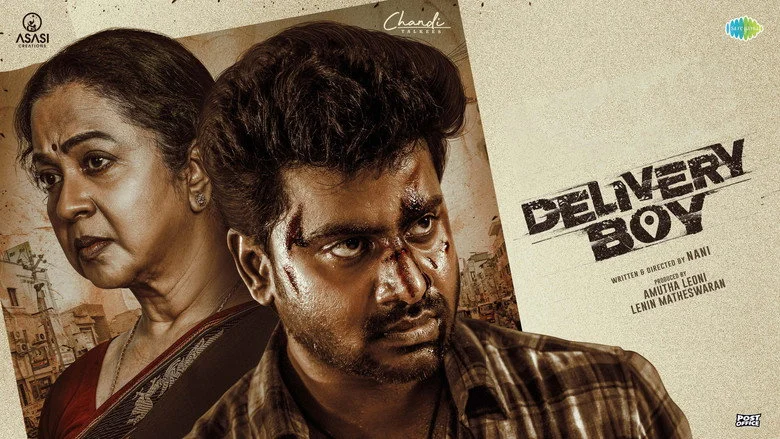
Nani Darla’s Linear Screenplay Skips the Messy Middle
Director Nani Darla builds a clean cause-and-effect structure: steal to save mother, then face the fallout when an innocent man is accused. That clarity is a strength. The setup is front-loaded with urgency, and the mother-son dynamic creates immediate stakes that a purely procedural thriller would lack.
The weakness is in the connective tissue. The jump from the theft to the false-accusation reveal feels engineered rather than earned. Darla trusts the premise to carry tension, but the screenplay’s linearity flattens the paranoia that should bloom between those two poles. I wanted the film to sit longer in the rider’s dread before pushing him toward redemption.
The Theft Scene Works Because the Stakes Are Personal
The moment Sivakumar’s rider decides to steal is the film’s dramatic engine. It is not choreographed as a heist; it is a son fumbling through a moral breach because the alternative is unthinkable. That scene grounds the drama in a physical, recognizable desperation that no amount of dialogue could replicate.
What follows is a procedural drift. The reveal that the man linked to that theft has been falsely accused of murder adds a second layer, but Darla handles it as plot mechanics rather than suspense. The delivery-rider profession itself, the streets, the deadlines, the invisibility, stays underused as a visual or thematic motif.
The redemption arc is where the film hopes to land its punch. The protagonist’s decision to risk everything is noble on paper, yet the execution leans on familiar beats of confession and chase. Without a named antagonist, the opposing force becomes the legal system and the protagonist’s own guilt, an abstract hurdle that dilutes the action-drama tension the genre tag promises.
Radhika Sarathkumar Carries the Emotional Weight
Radhika Sarathkumar, as the ailing mother, is the film’s quiet anchor. Her condition triggers the central crisis, and she makes that vulnerability feel lived-in rather than performative. The hospital-bed exchanges between her and Sivakumar carry more truth than any of the crime-related stretches.
The supporting roster, Brigida Saga, Kaali Venkat, Bose Venkat, Jenson Dhivakar, remains largely undefined in the available narrative. Their casting signals a solid Tamil character-actor base, suggesting the film wants texture around its lead. But without scene-level definition, they function as furniture in a drama that should have used them to complicate the rider’s world.
Audience Fit, Not Controversy, Defines This Release
Delivery Boy arrives with no political baggage or censorship noise, a clean slate that lets the film stand purely on its dramatic merits. The budget estimate of $418, 632, reported by Kinomia, points to a modest production banking on performance and story rather than scale.
That positioning fits the target audience: fans of Tamil drama who prefer family conflict and redemption arcs over spectacle. Viewers chasing mass-action highs will leave disappointed. The film’s appeal rests on whether you buy the central moral question, can one desperate act be corrected later?, and whether Sivakumar’s earnestness is enough to carry you through the procedural drag.
For those who value emotional family conflict over plot mechanics, this is a serviceable watch. For everyone else, the familiar shape of the redemption drama offers little new terrain. Explore more Tamil drama reviews to see how this stacks against the genre’s recent output.
Delivery Boy is a sincere but structurally cautious drama that never quite earns its action billing. Sivakumar’s commitment is visible, Sarathkumar elevates every scene she touches, yet the screenplay’s linear comfort zone leaves the moral dilemma undercooked. Watch it for the mother-son beats, skip it if you need your crime narratives to twist. A fair 2.5 out of 5, competent, earnest, but a long way from essential.
The film’s focus on a working-class protagonist wrestling with guilt recalls the grounded stakes of Mirzapur review‘s moral compromises.
For a more layered take on a protagonist caught between duty and desperation, Poovellaam Kettuppaar verdict offers sharper tension.

Ankit Jaiswal is the Chief Author, covering Indian cinema and OTT releases with honest, no-filler criticism. An SEO strategist by background, he brings a research-driven approach to film writing, cutting through hype to tell you exactly what's worth your time.