
Toxic: A Fairy Tale for Grown-ups (2026): Yash Commands Every lifts key stretches, not the full runtime
The opening frames of Geetu Mohandas’ Toxic: A Fairy Tale for Grown-Ups don’t ease you in, they throw you into a world where Yash’s Raya, also known as Ticket, moves through violence like it’s a second language. This is a 194-minute Kannada action thriller that wants to be everything at once, and that ambition is both its most exciting quality and its most frustrating burden.

Yash Commands Every Frame He Occupies, But Even He Can’t Fix the Drag
Yash delivers exactly what his fans expect and then some. His screen presence is the gravitational center of this film, and the action work he performs here has been singled out in reviews as genuinely impressive.
The problem is that a star of his magnitude needs a script that matches his energy. The pacing issues that critics have flagged repeatedly suggest that even Raya’s magnetic pull can’t compensate for a narrative that loses its way in the middle stretches.

Geetu Mohandas Aims for the Stars, Stumbles on the Ground
Mohandas’ direction shows real ambition, and the technical execution of this production is something critics have consistently praised. The film looks expensive, feels large, and demonstrates a visual confidence that matches its reported ₹500–800 crore budget.
But ambition without discipline creates structural problems. The screenplay’s pacing is the film’s biggest weakness, and the thematic muddiness, particularly around substance abuse and violence, suggests a director who couldn’t decide what she wanted her fairy tale to say.
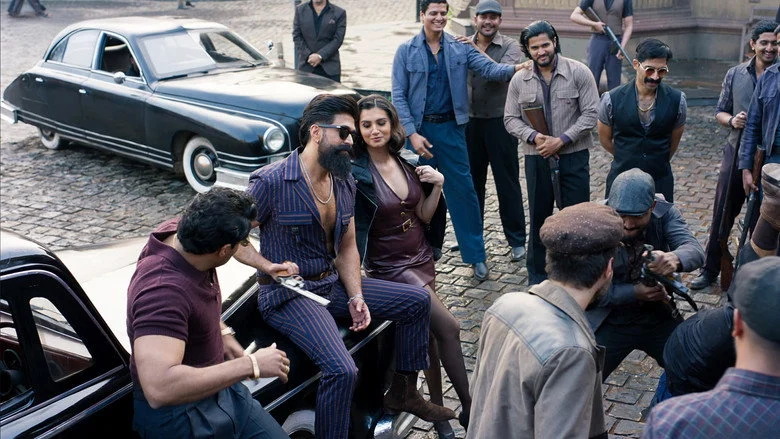
Action Craft and Genre Execution
The action sequences in Toxic are the film’s strongest suit, and they’ve received positive notices across critical coverage. Yash’s physicality in these setpieces gives the film a muscular credibility that pure CGI spectacle often lacks. The choreography feels designed for the big screen, and the technical team behind these sequences deserves the praise they’ve collected.
Yet the violence carries a cost. The excessive bloodshed and sexual content have drawn consistent criticism, and the A certificate feels earned rather than decorative. This is not a film that apologizes for its adult content, it wallows in it, sometimes at the expense of narrative momentum.
The 194-minute runtime is a genuine test of endurance. While the action beats land with force, the spaces between them sag noticeably, and the pacing problems that critics have flagged become harder to forgive as the film stretches toward its third hour.
The Women of Toxic: Nayanthara and Kiara Advani Hold Their Ground
Nayanthara’s Ganga has been praised in reviews, and her presence adds a weight that the film desperately needs. She brings a steadiness to scenes that might otherwise collapse under the film’s excesses.
Kiara Advani’s Nadia is another standout, her performance has drawn specific praise, and it’s easy to see why. She finds moments of genuine character in a film that often prioritizes spectacle over interiority. Huma Qureshi’s Elizabeth rounds out the key supporting cast, though granular analysis of her work remains thin in available coverage.
Darrell D’Silva’s Salvador serves as the antagonist, and while detailed performance analysis is scarce, his casting signals a deliberate move toward international genre credibility. The film’s willingness to build its villain around a British actor suggests ambitions beyond domestic markets.
Audience Reception and the A-Certificate Gamble
The film opened to ₹72.84 crore net in India and ₹140.75 crore gross worldwide on day one, according to Indian Express and Sacnilk-reported coverage. Those are staggering numbers for an A-certificate film, and they prove that Yash’s box office pull remains formidable.
But the audience response is split in ways that matter. Fans and mass audiences drawn to star-led action films are finding plenty to celebrate, the performances, the scale, the technical polish. Family audiences and viewers sensitive to violence will find this a genuinely difficult watch.
Rotten Tomatoes’ average critic rating sits at 4.4, which suggests critical goodwill exists but comes with significant caveats. The criticisms around pacing and thematic execution aren’t minor quibbles, they’re structural issues that will determine whether this film has legs beyond its opening weekend.
The reported budget range of ₹500–800 crore makes this one of the most expensive Indian productions ever attempted. That context matters when evaluating what Mohandas and her team have achieved, and it also raises the stakes for what the film’s long-term box office trajectory needs to look like.
I find myself genuinely torn on this one, the craft is undeniable, but the experience of watching it is frequently exhausting. This is a film that demands your attention for over three hours and doesn’t always reward it.
For those who want to explore more Kannada action cinema, the landscape is rich with similar experiments in scale and ambition.
The Verdict: A Spectacle That Tests Its Own Audience
Toxic: A Fairy Tale for Grown-Ups is a film for Yash’s fans first, action enthusiasts second, and everyone else a distant third. It’s best experienced in IMAX or a large-screen theatrical format where the technical achievements can overwhelm the pacing problems. If you’re willing to accept violence, sexual content, and a runtime that demands patience, there’s real craft here worth seeing. If you’re looking for a tight, thematically coherent thriller, this isn’t it.
Toxic earns a 3.5 out of 5, a flawed, ambitious spectacle that’s worth seeing for its action craft and performances, but one that asks you to forgive a lot along the way.
Yash’s character work here shares DNA with the layered anti-heroes explored in Character s review.
The film’s struggle to balance spectacle and storytelling echoes the execution problems examined in Equal verdict.

Ankit Jaiswal is the Chief Author, covering Indian cinema and OTT releases with honest, no-filler criticism. An SEO strategist by background, he brings a research-driven approach to film writing, cutting through hype to tell you exactly what's worth your time.