Jailer 2 (2026): Rajinikanth’s Undercover Return Is a Slow-Burn Detonation
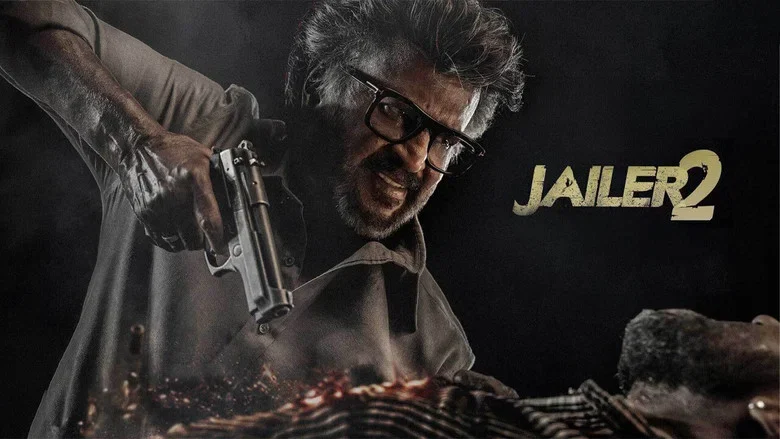
The driver’s uniform is the first lie Tiger Muthuvel Pandian tells, and Nelson Dilipkumar films it with the patience of a man watching a kettle refuse to boil. The retired jail warden has swapped his khaki for a hired car’s seat cover, and the film’s entire dramatic engine hums in that mundane disguise.
A Retirement That Refuses To Stay Retired
The premise is elegantly cruel: Muthuvel has buried the warden, the interrogator, and the executioner under a quiet domestic life. When a criminal organization threatens his family and the legacy he built, that burial becomes untenable.
What separates this from a dozen other retired-assassin stories is the infiltration method. He does not storm the fortress. He drives into it, one passenger at a time, mapping the command structure from the front seat while his employers assume he is furniture.
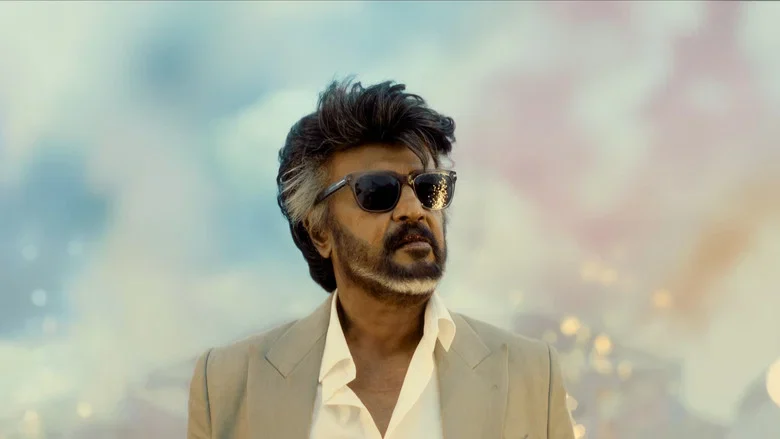
Nelson understands that a star of Rajinikanth’s magnitude generates its own gravity, so he spends the first act actively suppressing it. The camera keeps Muthuvel at a distance, in doorways, in rear-view mirrors, a face half-lit by dashboard glow. The restraint is deliberate and occasionally agonizing.
When Concealment Becomes The Only Weapon
The middle act’s central mechanism is not combat but performance anxiety. Muthuvel must appear ordinary while privately cataloguing every face, every phone call, every hushed conversation in the back seat.
There is a sequence where he waits in a parked car while violence happens somewhere off-screen, and Rajinikanth plays the listening with his jaw and his hands on the wheel. It is the film’s most disciplined passage, and it works precisely because nothing explodes.
The screenplay then does what sequels always do: it escalates. Former allies are summoned, the operation widens, and the private family threat balloons into a war against an institutional criminal network. The transition is functional, though it costs the film some of its early claustrophobia.
Where this sequel improves on its predecessor is in giving Muthuvel a sustained concealment-based engine rather than a reactive revenge loop. Just as the filmmaker demonstrated a tighter spatial discipline in Toxic, Nelson strips away decorative camera moves here to prioritize raw psychological friction over choreographed spectacle.
The Stillness That Manufactures Pressure
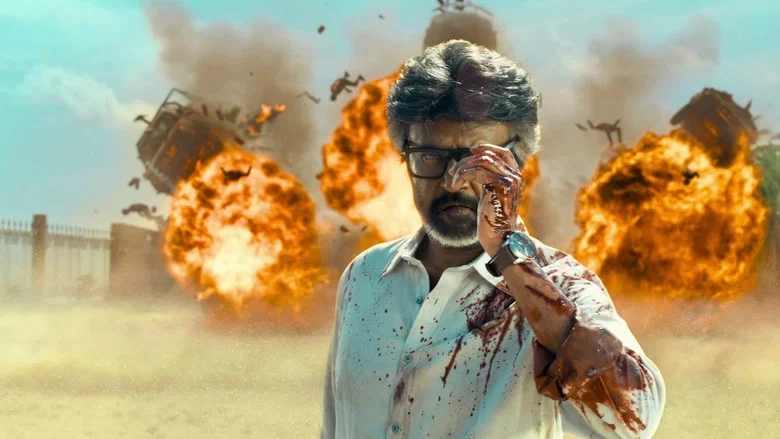
Rajinikanth’s late-career performances have increasingly favored stillness over flourish, and this is his most controlled work in years. Watch how he receives an insult from a subordinate: no clenched fist, no theatrical glare, just a slow blink and a return to the gearshift.
The physical contrast between his driver’s posture, shoulders rounded, gaze lowered, and the lethal economy of his movements when the cover finally cracks is the film’s richest visual argument. The body remembers what the man tried to forget.
The restrained physical exhaustion he brings to the final confrontation recalls the psychological weight of his turn in Sardar 2, where the action was likewise built around a man outrunning his own history.
Among the returning ensemble, Ramya Krishnan anchors the domestic scenes with a watchfulness that suggests she has always known her husband’s retirement was provisional. S.J. Suryah, in a new role, brings a jittery verbal energy that cuts against Rajinikanth’s stillness in their shared scenes, though the screenplay never quite gives him a confrontation worthy of the friction.
The Antagonist Problem Nobody Solved
Here is where the film stumbles into the same ditch as its predecessor. The criminal organization is framed as a hydra, expanding, institutional, faceless, but facelessness is not the same as menace.
Nelson stages the threat through implication: a phone call, a name dropped, a wing of the operation revealed. The technique generates unease in the first hour, but by the third act the audience needs a person to hate, and the film keeps offering structures instead of souls.
The screenplay resists the kinetic sensationalism that overtook Sigma, opting instead for a deliberate, suffocating dread, but that patience curdles when the climax arrives and the villain remains a boardroom abstraction.
The reported cameos, Mohanlal, Shiva Rajkumar, and others, land as applause cues rather than dramatic necessities. They are enjoyable in the moment, but they paper over a structural vacuum where a genuine antagonist should stand.
Pacing, Silence, And The Four-Hour Ghost
The first half moves with genuine patience, letting the domestic world breathe before the violence intrudes. The second half accelerates into coordinated operations and large-scale set pieces, and the tonal shift is jarring rather than thrilling.
Anil Kapoor’s editing rhythm in the infiltration sequences is sharp, favoring long takes of Rajinikanth simply observing. But the climactic stretch leans on quick cuts and swelling score, abandoning the discipline that made the earlier passages sing.
The runtime history, a cut reportedly exceeding four hours before theatrical trimming, shows in the middle act’s occasional drift. There are subplots involving the extended family that feel like survivors of a longer assembly, present but not fully integrated.
What holds it together is Rajinikanth’s face. In a film that often mistakes scale for stakes, his quiet register is the only thing that consistently signals consequence.
The Commercial Arithmetic Of A Rajinikanth Sequel
The producing banners behind this sequel are betting on the same calculation that powered the first film: Rajinikanth’s opening-day draw remains the most reliable force in Tamil exhibition, and advance booking for the Tamil Nadu market has reportedly crossed the ten-crore threshold before a single show has screened.
But the franchise math is more complicated than the star math. The original Jailer was a self-contained story with a clean emotional arc. This sequel exists because the first one made money, and the screenplay knows it, padding its middle with connective tissue designed to justify a third installment.
The regional remake pipeline and the star-vehicle sequel economy are both showing fatigue across contemporary Tamil actions, where original IP increasingly struggles to secure the budgets that legacy franchises command. Jailer 2 will open enormous. Whether it holds depends on whether audiences forgive a third act that mistakes a criminal network for a character.
For Nelson Dilipkumar, the stakes are professional as much as commercial. He has now made two films in this universe, and the law of diminishing returns is watching closely.
The Uncomfortable Resolution
What the film ultimately argues is bleak: a man cannot retire from who he is. Muthuvel’s attempt to bury the warden fails not because the world drags him back, but because the world was always going to need him, and he was always going to answer.
The final confrontation resolves the plot but not the question. He dismantles the organization, protects the family, and returns to the driver’s seat of a life he thought he had left behind, older, wearier, and no closer to peace.
It is a conclusion that feels less like closure and more like a held breath. The film ends with Muthuvel watching, waiting, and the audience understands that the next threat is already forming somewhere off-screen. That is the franchise’s real subject: the impossibility of the quiet life for a man built for violence.
Jailer 2 is a more disciplined film than its predecessor and a less satisfying one, because it trades the first film’s clean revenge architecture for a sprawling institutional conflict it never fully personifies. Rajinikanth remains the reason to buy the ticket, and he delivers a performance of remarkable restraint. But a star can only carry a story so far before the story has to carry itself, and this one keeps handing the weight back to him.

Ankit Jaiswal is the Chief Author, covering Indian cinema and OTT releases with honest, no-filler criticism. An SEO strategist by background, he brings a research-driven approach to film writing, cutting through hype to tell you exactly what's worth your time.