HALF (2026): The Vampire Western That Bites Off More Than It Can Chew
Somewhere on an empty Rajasthan highway, a bandit learns the hard way that robbing the wrong twins is a terminal career decision. There is no slow motion. No wire-fu float. Just bone, dust, and the percussive snap of Pencak Silat landing at real speed, and for about twenty minutes, Half is the most electric thing Malayalam cinema has put on a screen this decade. Then the film keeps going, and the trouble starts.
Director Samjad, working from a script co-written with Praveen Viswanath, has built something genuinely unprecedented: a 96-minute vampire western that opens in Europe, migrates to India, and detonates in the Thar desert. That it exists at all is a minor miracle of pan-Indian ambition. That it premiered at TIFF Midnight Madness, a first for Malayalam cinema, is a legitimate landmark. And that it spends its final act squandering that goodwill on escalating carnage is the kind of frustration that separates a great festival conversation from a great film.
The Origin Story Problem: Europe, Then Everything Else
The prologue does its expositional homework with grim efficiency. Vampire twins Victor and Rebecca; a human woman named Sofia (Amala Paul) caught between them; a pregnancy; a parental sacrifice; and two half-breed children, Ethan and Ivy, smuggled to India and raised in hiding. It’s a lot of lore delivered in a hurry, and Samjad treats it as throat-clearing rather than drama. Amala Paul’s Sofia registers mainly as a plot mechanism, her screen time too brief to anchor the emotional stakes the third act will later demand we feel.
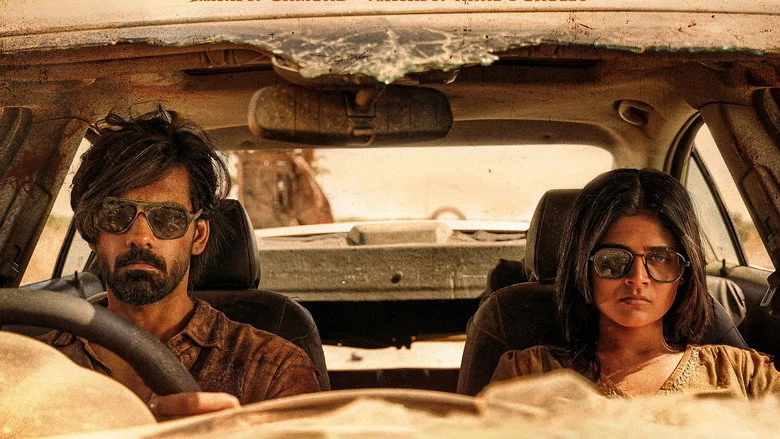
The film genuinely wakes up once Ranjith Sajeev’s Ethan and Aiswarya Raj’s Ivy hit the road after their mother’s death. Pappinu’s cinematography turns the desert into a character, heat shimmer, empty tarmac, horizon lines that swallow the frame. Mahesh Bhuvanend’s editing, sharp as it is, knows exactly when to cut and when to hold. For a stretch, this is a road movie with fangs, and it hums.
The Silat Sequence: Where the Film Earns Its Festival Slot
Here is the scene everyone will talk about, and rightly. When the bandits, led by Abbas’s Selli and Sreekanth Murali’s Simon, ambush the twins, the film stops pretending to be a horror movie and becomes a martial arts picture. Choreographer Very Tri Yulisman, whose pedigree runs through the Indonesian action school, stages the fight in long, unbroken takes with the camera planted at mid-distance. No slow motion. No cutaway cheats. Ranjith Sajeev, who trained for months in Pencak Silat, sells every elbow and sweep with the specific heaviness of a body actually absorbing impact. Aiswarya Raj matches him beat for beat, and the siblings’ choreography reads as fraternal, economical, synchronized, almost bored by the violence they’re inflicting.
That boredom is the point. The twins are invulnerable, and the film knows it. For twenty minutes, invulnerability is thrilling. Then it becomes the film’s structural problem.
If you want a study in how a genre premise can be sustained by escalating consequence rather than escalating body count, our review desk’s take on Daayra review is instructive, a film that understands restraint as a form of tension. Half does not.
Invincible Protagonists, Diminishing Returns
The revenge campaign in the back half is where the wheels wobble. Because Ethan and Ivy cannot be hurt, every confrontation is a foregone conclusion, and Samjad stages them with increasing graphicness as if volume can substitute for stakes. Early reviews flagged this, the tumble into excess, the loss of steam, and they’re right. A film that opened with real-time martial arts discipline starts reaching for shock value, and the tonal shift is jarring rather than organic. The violence stops being a character trait and becomes a marketing beat.
The supporting cast doesn’t get much room to help. Joji Mundakayam and Anjali Nair appear in functional roles that the screenplay never bothers to deepen. The antagonists, Abbas and Sreekanth Murali, are credible physical presences but written as interchangeable highway predators, the kind of villains who exist to be dispatched rather than feared. Compare that to the way a mystery can sustain dread through withheld information rather than body count, as we explored in our analysis of Dark Heaven verdict, and the gap in craft becomes clear.
What Works, What Doesn’t: A Ledger
Works: The Silat choreography is genuinely world-class. Pappinu’s desert photography elevates the film beyond its budget. Midhun Mukundan’s score, with sound design by Vishnu Govind, builds a genuinely haunting aural texture. The 117-day shoot across multiple terrains shows on screen. And the sheer audacity of the genre mash-up, vampire lore, curry western, road thriller, pan-Indian multilingual release, deserves respect.
Doesn’t work: The third act’s pacing collapses under the weight of its own violence. The invulnerable protagonists drain tension from every set piece. The emotional core, two half-human beings torn between worlds, is stated in dialogue rather than dramatized. And the film never quite decides whether it wants to be a genre thrill ride or a character study, so it ends up half of both.
The Verdict
Meenakshi Shedde called it “an extraordinary landmark in filmmaking Malayalam cinema has initiated, ” and she’s not wrong about the landmark part. Half opens a door that Indian genre cinema should have walked through years ago. But landmarks aren’t the same as great films, and this one stumbles precisely where it should sprint. The first hour is a genuine thrill; the last thirty minutes are a chore.
See it for the Silat sequences. See it for what it proves is possible. But temper your expectations, this is a promising misfire from a director who clearly has a better film in him. For more of our ongoing festival and genre coverage, check Malayalam Thriller reviews.
Rating: ★★½ / 5
Who should watch: Hardcore action fans, festival audiences, and anyone invested in the evolution of Malayalam genre cinema. Who should skip: Families, casual viewers, and anyone hoping for a fully realized vampire epic. Best format: Theatrical for the action; the rest can wait for streaming.

Ankit Jaiswal is the Chief Author, covering Indian cinema and OTT releases with honest, no-filler criticism. An SEO strategist by background, he brings a research-driven approach to film writing, cutting through hype to tell you exactly what's worth your time.