Batwara 1947 (2026): Sunny Deol, Shabana Azmi Anchor a Partition Drama With Moral Weight
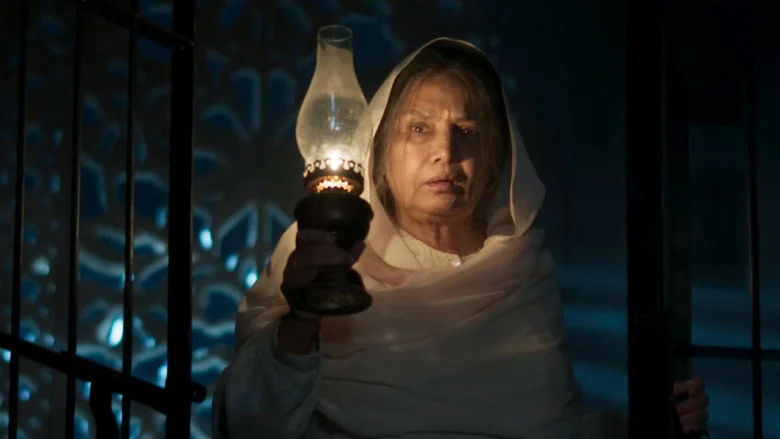
The house in Lahore has two claimants: a refugee family with a government allotment paper and an elderly Hindu woman who refuses to move. That single image, Mai standing her ground as Sikander Mirza’s family argues at the door, carries the entire moral weight of Rajkumar Santoshi’s Batwara 1947.
Shabana Azmi Turns Property Dispute Into a Human Standoff
Azmi’s Mai is not a symbol; she is stubborn flesh and blood. Her refusal to vacate transforms a legal allocation into a question of dignity, and the trailer suggests she holds the frame with quiet authority.
The casting signals intent. Azmi as the moral center gives the film a gravity that a lesser performer would have flattened into melodrama.
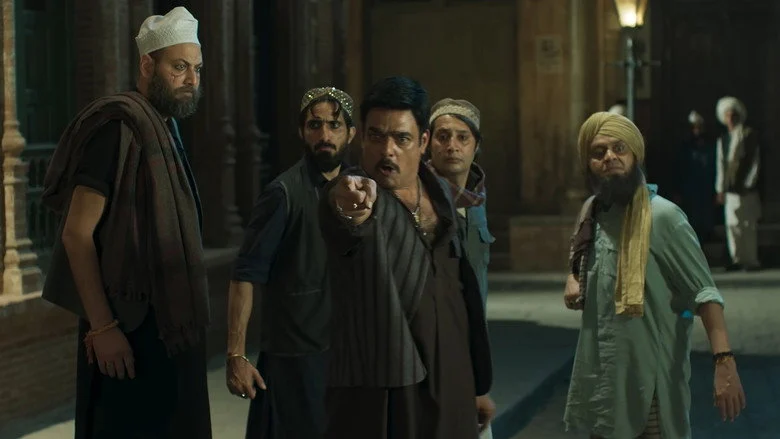
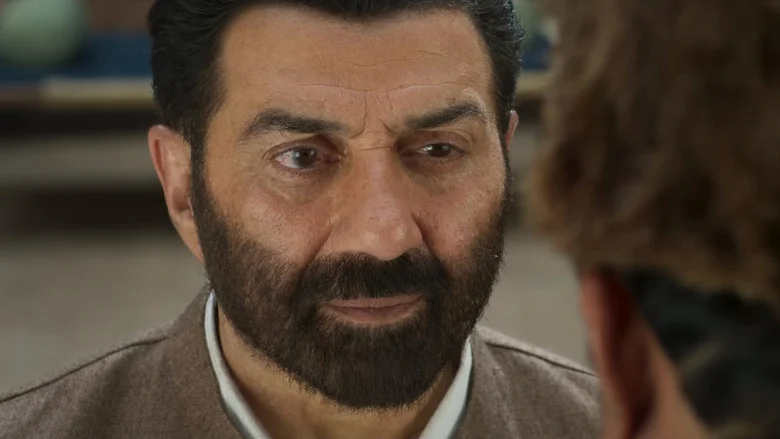
Sunny Deol’s Sikander Mirza Carries Confrontation and Conscience
Deol is positioned as the displaced family figure whose anger must clash with empathy. The role demands he balance his known explosive register with the quieter burden of guilt, a tension visible even in promotional material.
His confrontation with the occupied house is the film’s engine, but the real test will be whether he can make silence land as hard as his trademark outbursts.
The House as a Stage: Genre-Core Execution
Santoshi adapts Asghar Wajahat’s play, and the single-house setting suits chamber-style drama. The conflict is intimate, built on dialogue and moral pressure rather than battlefield spectacle, even as the Partition backdrop raises the stakes outside the walls.
The action label suggests some physical confrontations, but the trailer’s framing emphasizes human cost over setpieces. That restraint, if sustained, separates this from conventional period action films.
Cinematographer Santosh Sivan’s period visuals and A.R. Rahman’s score add craft credibility. The film reportedly carries a ₹150 crore budget per Wikipedia, which signals a large-scale production built on a deliberately contained conflict.
For more on how big-budget films handle intimate conflicts, browse our Hindi Action reviews.
Preity Zinta and the Ensemble’s Calculated Weight
Zinta returns as Hamida, placed opposite the central conflict rather than inside it. Her presence suggests a perspective that mediates between the family’s claim and Mai’s resistance, though scene-level detail remains under wraps.
Ali Fazal and Karan Deol round out the household, while Abhimanyu Singh’s Yakub Khan is listed as the antagonist. His exact function is not yet clear, but his casting as a physical threat against Deol’s moral struggle creates an obvious dramatic counterpoint.
Partition Politics and the Audience Question
The CBFC cleared the film without cuts, which is notable given the politically sensitive backdrop. That decision suggests the film’s treatment of Partition leans toward humanist conflict rather than partisan provocation.
For audiences, the appeal is clear: Santoshi’s directorial reputation, Rahman and Javed Akhtar’s involvement, and a cast pairing that spans generations. Those seeking light entertainment should look elsewhere; this is pitched squarely at viewers who want their history served with moral complexity.
I suspect the film’s real battle will be tonal, keeping the chamber drama tense without letting the historical violence overwhelm the household metaphor.
Batwara 1947 is a theatrical watch for those who value craft and confrontation over spectacle. The premise is strong, the cast is right, and the moral question is timeless, but the execution will decide if this is a classic or a missed opportunity. For a Partition drama built on a single powerful performance, the film earns a 3.5 out of 5 on promise alone, with the final verdict resting on how well Santoshi sustains the house’s tension.
For a similar study in obsession and moral conflict, see how Photographer review handles its central fixation.
If you prefer stories of calculated risk and industrial vision, G D verdict offers a different kind of gamble.

Ankit Jaiswal is the Chief Author, covering Indian cinema and OTT releases with honest, no-filler criticism. An SEO strategist by background, he brings a research-driven approach to film writing, cutting through hype to tell you exactly what's worth your time.