Peddi (2026): Ram Charan’s Rural Sports Drama Stumbles on Execution
A Sports Ministry official arrives in 1980s rural Andhra Pradesh to discover something unexpected: a village where athletic prowess has become the currency of pride and identity. Peddi, the local wrestler and cricketer, emerges as the embodiment of his community’s defiant spirit. Within minutes, you sense Buchi Babu Sana has bet everything on a premise that could resonate deeply, or collapse under its own ambitions.
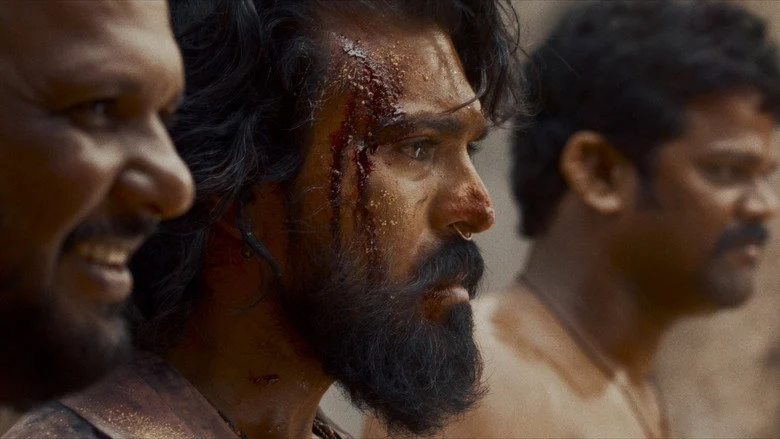
Ram Charan’s physicality anchors an uneven narrative
The lead performance carries the film’s heaviest load, and Charan delivers through the sports sequences and emotional pivots that define the middle sections. His scenes wrestling and playing cricket remain the film’s most honest moments. Yet even his screen presence cannot fully compensate for a screenplay that stumbles in its larger architecture.
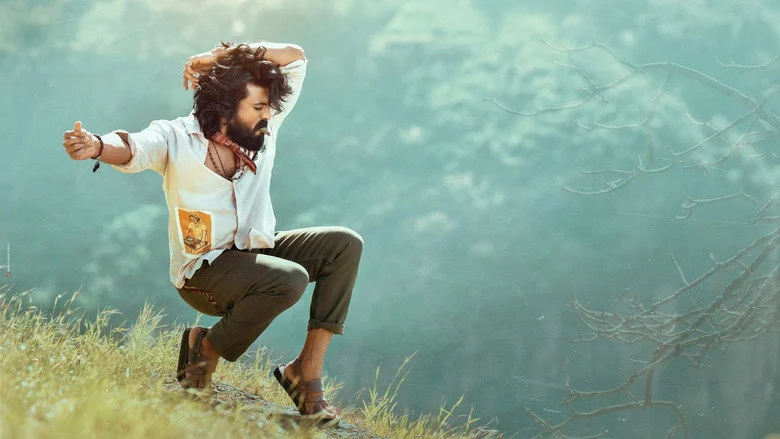
Buchi Babu Sana builds rural authenticity but loses narrative control
The director roots the film convincingly in 1980s village culture and frames sport as a vessel for community resistance rather than individual glory. This thematic ambition distinguishes Peddi from standard sports fare. However, the screenplay itself was repeatedly criticized, and the film’s 3-hour-7-minute runtime betrays pacing problems that no amount of location authenticity can mask. The linear structure is serviceable, but the storytelling discipline needed to support such length simply isn’t there.
Sana’s choice to emphasize village-unity over protagonist mythology is directorial strength. Yet a tighter edit and sharper dialogue would have transformed potential into execution. The film assumes its audience will wait for payoffs that don’t always justify the screen time.
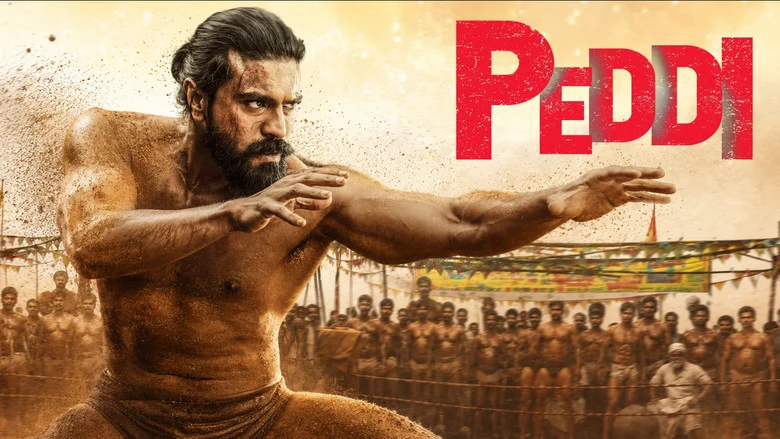
Supporting ensemble underutilized despite capable casting
Jagapathi Babu emerges as a standout presence in scenes that showcase his ability to embody authority and menace, particularly in moments that set the village’s rival threat into focus. Shiva Rajkumar, Divyenndu Sharma, and Boman Irani occupy important structural roles, yet the screenplay rarely gives them scenes that exploit their respective craft. The casting signals serious intent; the writing does not follow through.
Janhvi Kapoor’s arc as Achiyamma becomes a point of contention rather than narrative investment. Several sequences involving her character were criticized as objectionable, and they feel narratively disconnected from the film’s larger thematic project about village pride. These moments read as tonal violations rather than organic character moments.
Discover more perspectives on Telugu cinema and regional storytelling in our Telugu Drama reviews section.
Sports-action grammar works in isolation, collapses under narrative weight
The cricket and wrestling sequences are filmed with sufficient visual clarity to understand spatial geography and stakes. The village sports material anchors the action layer effectively during the first half.
The Sports Ministry official’s arrival and discovery of the village’s athletic culture represents genre craft at its clearest, setup, exposition, and thematic introduction converge cleanly.
Once the film moves into its second half and the rival conflict intensifies, the action becomes subordinate to emotional beats that the screenplay hasn’t earned. Genre execution cannot survive weak dialogue and narrative indulgence. The action here serves a story that hasn’t bothered to make itself coherent.
The film achieved the distinction of becoming the highest-grossing Telugu film of 2026, with a worldwide gross reported at ₹393 crore, a figure that reflects Ram Charan’s starpower and premium-format exhibition strategy more than narrative merit. Premium IMAX release expanded the film’s reach, but theatrical scale cannot substitute for dramatic discipline.
Objectionable content undermines thematic purity
The obscene scenes involving Janhvi Kapoor stand as the film’s most glaring miscalculation. A rural sports-drama built on themes of community pride and social unity has no structural reason to include this material. These moments read as commercial desperation masquerading as character complexity.
Peddi’s central thesis, that sport becomes a tool for village identity and resistance, deserves storytelling clarity. The film’s indulgence in unnecessary controversy contradicts its own thematic project. I found these moments not merely offensive but narratively counterproductive, introducing friction where the film needed forward momentum.
If you value Ram Charan’s screen presence and the rural sports-drama premise more than you demand disciplined screenplay craft, Peddi delivers enough in its best moments to justify a theatrical watch, preferably in IMAX to maximize the village’s visual scale. For viewers seeking tightly constructed narratives, the three-hour runtime and scattered pacing make this an easy pass. Rent it on streaming if curiosity wins; don’t rearrange your weekend around it.
For similar director-driven rural storytelling with stronger execution, explore Mollywood Times review.
Peddi (2026) is a flawed vehicle that coasts on Ram Charan’s physicality and a compelling premise but betrays both through indulgent screenplay choices and excessive runtime, call it a 2.5/5 effort that underperforms its own ambitions.
Both films stake identity claims through performance-centered rural narratives, as explored in ETERNAL MAN verdict.

Ankit Jaiswal is the Chief Author, covering Indian cinema and OTT releases with honest, no-filler criticism. An SEO strategist by background, he brings a research-driven approach to film writing, cutting through hype to tell you exactly what's worth your time.