Satluj (2026): Diljit Dosanjh’s Harrowing but Uneven Human Rights Drama
There is a moment in Satluj where Jaswant Singh Khalra, a bank employee turned amateur detective, visits a local cremation ground in Amritsar. The camera lingers on a heap of ash and bone fragments not meant for any grieving family, a visual that suggests hundreds of people were disposed of like waste, not mourned. From this early scene, director Honey Trehan signals that his film will be both an act of historical witness and a test of how much unspeakable truth an audience can bear.
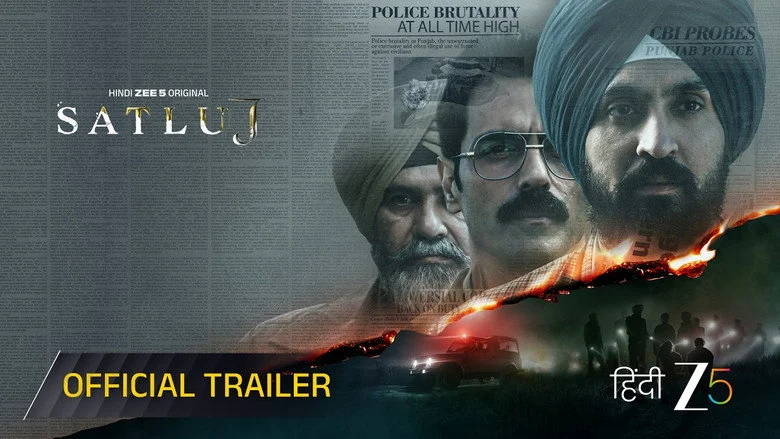
Diljit Dosanjh Finds a Moral Register Beyond Stardom
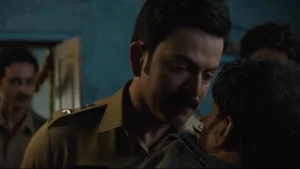
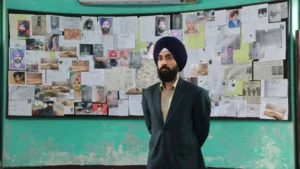
Dosanjh has spent years mastering the Punjabi star persona, but here he sheds every trace of swagger. As Khalra, he chooses restraint, a slight tremor in his voice during the police confrontation scene, a stillness that reads as confusion hardening into resolve. The performance works because it never feels like an actor playing ordinary; it feels like a man shrinking under the weight of what he sees, then choosing to carry it anyway.
Honey Trehan’s Direction Commits to Tone but Misses a Beat
Trehan, who co-wrote alongside Niren Bhatt and Utsav Mitra, directs Satluj with a deliberate, slow-burning eye that refuses to sensationalise Khalra’s investigation. The first half builds dread through paperwork, footprints, and the chilling silence of officials who know exactly what is being unearthed. The problem arrives at Khalra’s abduction, which flashes on screen with such abruptness that it robs the moment of its earned devastation, a structural misfire in an otherwise carefully assembled film.
The Social Drama and Investigative Thriller Divide
Satluj works best as a social drama because it understands that systemic horror does not require chase sequences. The cremation ground discovery, shot in grim, almost documentary light, lands with the force of a real gut punch because Trehan trusts the material over manipulation. The screenplay lets the bureaucracy of death speak for itself.
As an investigative thriller, however, the film stumbles. The police conspiracy remains frustratingly abstract; Khalra finds documents and names, but the machinery behind the disappearances never quite takes shape as a tangible antagonist. Arjun Rampal’s CBIA officer appears too sparingly to function as a looming threat, and the narrative occasionally stalls inside small rooms of inquiry.
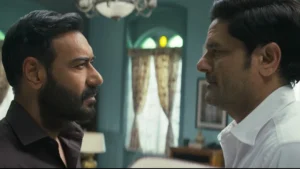
Still, the slow-burning structure earns its place. When Khalra finally confronts a Punjab Police officer, the scene crackles with a moral clarity that genre conventions rarely achieve. It is less a thriller payoff than a philosophical standoff, and Dosanjh sells every syllable as though his life depends on it, because it does.
Supporting Cast: Thin Scripts, Heavy Shadows
Suvinder Vicky, playing a Punjab Police officer, brings a menacing physicality to a role that the screenplay leaves deliberately vague. Every glance from Vicky suggests a man who has internalised violence as routine, and his quiet presence haunts several scenes. Kanwaljit Singh, as Khalra’s wife, has only a few moments, but she makes them count, one close-up of her face reacting to her husband’s documentation work says more about a family fraying at the edges than any monologue could. Geetika Vidya Ohlyan plays a journalist whose function is more narrative convenience than character, though her casting signals an attempt to broaden the film’s perspective beyond Khalra’s lonely heroism. Filmfare rated the film 7.8/10, calling it “a devastating chronicle of courage and conscience, ” but the supporting cast deserved better than the sketched outlines they received.
Audience Reception and the Censor Board Clash
On IMDb, Satluj holds a 7.6/10 from over 12, 000 votes, with the BookMyShow audience score climbing to 8.2/10, numbers that reflect real investment in Khalra’s story rather than blind fandom. Yet the film spent three years locked in a censor board dispute before finally releasing uncut on ZEE5, a delay that testifies to the institutional resistance the film itself critiques. A significant 22% negative social sentiment points not to bad faith but to frustration: viewers wanted a clearer resolution, and Trehan refuses to give one because history did not either.
For more films like this, browse our full collection of Hindi Drama reviews.
There is one sentence I want to write as a critic, not an analyst: Trehan tries to honour Khalra by avoiding catharsis, but that choice leaves the film feeling like an unfinished scream rather than a complete story. Satluj is a difficult, necessary watch for those willing to sit with historical pain, best experienced on OTT in its uncut form. If you want resolution, you will not find it, only a river that keeps flowing past names that never got a grave.
Small Clouds review faces a similar tension between craft and meaningful reveal.
Satluj is an admirable but structurally uneven human rights drama, I would give it a solid 7.5/10 for its courage, not its construction. Satluj verdict completes its arc with the same mix of power and frustration.

Ankit Jaiswal is the Chief Author, covering Indian cinema and OTT releases with honest, no-filler criticism. An SEO strategist by background, he brings a research-driven approach to film writing, cutting through hype to tell you exactly what's worth your time.