Mahendragiri Varahi (2026): Sumanth Carries A Temple Thriller That Runs On Fumes
An offering plate empties itself into something nobody in the frame can see, and Mahendragiri village treats that ritual as routine. Into that hush walks Siddharth, an atheist YouTuber with a camera, a smirk, and a plan to explain away every miracle the Varahi temple keeps producing.
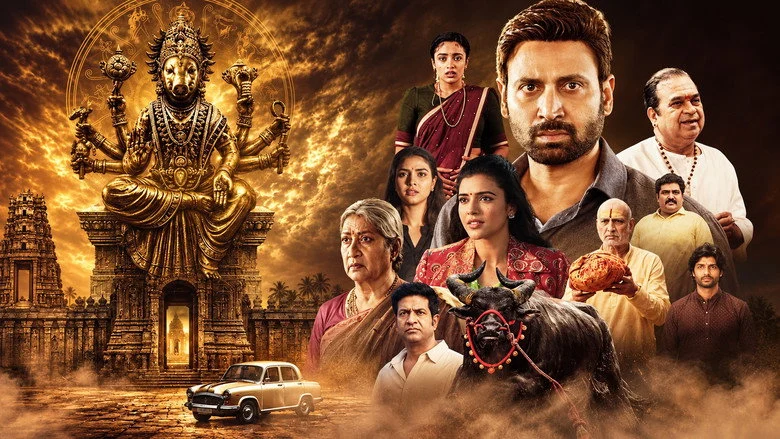
Sumanth Holds The Frame While The Curse Around Him Sags
Sumanth plays Siddharth as a man who trusts evidence over elders, and his investigative stretches, the ones dismantling local superstition on camera, are the film’s most praised passages. That sincerity does most of the lifting whenever the writing stops.
The Hindu called him “the only saving grace of this stale, tiring supernatural thriller, ” and that reading holds up over 154 minutes. He commits fully even when the screenplay asks him to explain a curse rather than feel one.
Santhossh Jagarlapudi Stages A Temple, Then Loses The Blueprint
The director’s strength is atmosphere: Mahendragiri’s hills and temple corridors carry genuine devotional weight, and the linear mythological backstory lands cleanly in the first hour. His weakness is momentum, because the second half recycles predictable supernatural beats without adding dread.
I kept waiting for the film to match Sumanth’s commitment, and it never did. M9 News landed on 1.5/5, and the shape of that score becomes visible in the pacing long before the credits roll.
That Offering-Consuming Spirit Still Beats Everything After It
The temple intro sequence, where the spirit consumes the offerings, is the film’s cleanest genre work. It trusts atmosphere over explanation, and the image lands in seconds without a line of dialogue. The later death traps and Varahi puzzles explain themselves twice and land half as hard.
Annapurna Studios delivers nearly one hour of VFX, and the supernatural guardians and temple effects mostly hold up. Anup Rubens’s background score does the chilling the writing skips, which is why the interval block hits hardest. The Hans India called the scale huge and compromise-free, and the money is visible on screen.
The pre-climax and climax stage Siddharth’s confrontation with Devendra Varma, a royal descendant hunting a hidden artifact for power. Rajeev Kanakala plays him with straight, unshowy menace, and the tantra practitioner beside him fills the ritual quota. Neither genuinely threatens Siddharth’s skepticism, only the runtime does.
The faith-versus-skepticism template has become a Telugu staple, and our Telugu Thriller reviews coverage keeps track of where that mythology heads next.
Meenakshi Goswami Investigates And The Women Still Get Nothing
Meenakshi Goswami’s journalist Madhavi is a capable partner in the investigation, present in every probe and given no interior life beyond it. Aishwarya Rajesh is cast in a dramatic, goddess-adjacent register the screenplay never turns into an actual character.
Siddhu Jonnalagadda’s serious special appearance carries more weight than the leads’ shared scenes, and Vennela Kishore’s comic researcher lands his beats cleanly. Brahmanandam and Malvika Nair are barely used, casting as decoration, not design.
Anup Rubens Chills; The Second Half Still Wears People Out
Nothing here has triggered a political storm, just a UA certificate and an audience split between craft and crawl. The praise stays consistent: Sumanth, the VFX, and Anup Rubens’s unsettling cues are named as reasons to buy a ticket.
The complaints are just as steady, a stale narrative, tiring execution, and female roles with nothing to do.
See Mahendragiri Varahi in a theatre if the temple intro and Anup Rubens’s score are enough for you, because the large-scale VFX is the one thing a small screen flattens. Otherwise wait for streaming, where the tiring second half can be skipped without losing a single plot point.
Sardar 2’s patchy script faces the same problem, a committed lead holding up material that keeps slipping.
Mahendragiri Varahi is a 2/5, go for Sumanth and that opening temple sequence, skip it if you want a story that earns its mythology.
The Transition’s weak payoffs echo this film’s pattern: real craft energy spent on a resolution that never fully arrives.

Ankit Jaiswal is the Chief Author, covering Indian cinema and OTT releases with honest, no-filler criticism. An SEO strategist by background, he brings a research-driven approach to film writing, cutting through hype to tell you exactly what's worth your time.