VISA – Vintara Saradaga (2026): Vintara Saradaga (2026): Ashok Galla Anchors A Student-Abroad Romance That Hasn’t Yet Shown Its Hand
The teaser sells a voice before it sells a face: a radio jockey narrating the small humiliations of an Indian student in America. That framing device is the most interesting thing VISA – Vintara Saradaga has shown us, and it is also the thing the promotional material refuses to push further.
A Radio Jockey As Narrator Is A Confession, Not A Gimmick
Ashok Galla’s protagonist talks about student life rather than living it on screen, which is a canny structural bet for a debut filmmaker. Udbhav Raghu appears to understand that homesickness is easier to describe than to dramatize, so he hands the describing to a man with a microphone.
Whether that voice-over becomes a genuine framing device or a crutch for scenes that cannot generate their own momentum is the question the film has not answered. The promotional material leans hard on the narration and light on the confrontation.
The American Dream As A Bureaucratic Obstacle Course
The title itself carries a sly double meaning, the visa as paperwork, the visa as the casual adventure of youth. That tension between administrative dread and youthful lightness is the film’s real subject, more so than the romance being advertised.
Academic pressure, career anxiety and the practical cost of an overseas future are all present in the disclosed premise. What is conspicuously absent is an antagonist, and that absence is either the film’s quiet intelligence or its structural soft spot.
Without a named opposing force, the drama must be generated entirely by internal conflict and relational friction. Recent Telugu cinema has shown that this can work when the writing is disciplined, much as the folk-biopic framework in Garividi Lakshmi found its tension in a community’s expectations rather than a villain’s scheming.
Chemistry In A Song Is Not Chemistry In A Scene
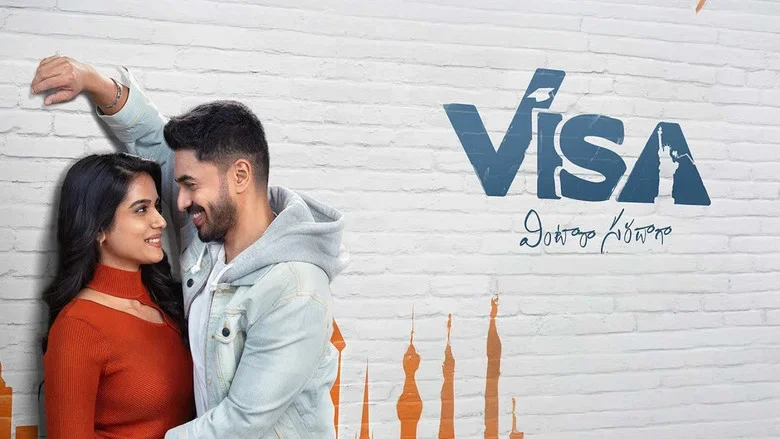
The “Anaga Anaga America” number presents Ashok Galla and Sri Gouri Priya as a couple whose ease with each other reads as unforced rather than choreographed. That is a real asset, and it is also the only performance evidence currently in circulation.
Romantic chemistry in a montage is a low bar; romantic chemistry in a two-minute argument with no music under it is the actual test. The film has not shown us that test, and the promotional strategy is careful to keep the pair in motion, in sunlight, and in cutaways.
What the song does reveal is a performer’s instinct for small physical comedy, a half-turn, a delayed reaction, a glance held a beat past politeness. Galla’s earlier work has been sold on charm, and the physical register here recalls the earnest, slightly overwhelmed romanticism of Titanic more than it does any contemporary Telugu hero template.
The Ensemble Problem Nobody Wants To Talk About
Rahul Vijay and Shivathmika Rajashekar are positioned as key members of the student circle, but the material gives no indication of what either of them actually wants. An ensemble comedy lives or dies on the specificity of its second and third leads, and specificity is precisely what the marketing withholds.
The comic contingent, Harsha Chemudu among them, is listed rather than showcased, which suggests either a deliberate withholding of the film’s best gags or a supporting bench that exists to fill group scenes. Both possibilities are worrying for different reasons.
Compare the structural confidence of a film like Crazy Kalyanam, which at least committed to a clear central relationship and built its comic digressions around it. Here the ensemble risks becoming a crowd rather than a cast.
Vijai Bulganin And The Question Of Tonal Control
A coming-of-age film set abroad needs a score that can hold melancholy and comedy in the same frame without announcing the switch. Vijai Bulganin’s presence is the strongest technical signal in the package, and the single released track suggests a melodic, unhurried palette.
What remains unproven is whether the film’s editing rhythm can sustain an observational first half before the emotional complications arrive. The premise implies an episodic campus comedy that must eventually tighten into a romance with stakes, and that transition is where most films of this type lose their footing.
Udbhav’s decision to foreground everyday student experience over the visual spectacle of American locations is the right instinct for the genre. It signals a filmmaker more interested in behavior than postcards, a tonal maturity that is slowly becoming visible across contemporary Telugu dramas aimed at younger audiences.
Sithara Entertainments Is Betting On A Debutant’s Read Of Its Own Audience
Naga Vamsi and Sai Soujanya are producing through Sithara Entertainments and Fortune Four Cinemas, and the commercial logic here is legible: a modestly scaled youth entertainer aimed at the overseas Telugu demographic that will recognize its own life on screen. That audience is reliable, and it is also narrow.
The film’s box-office ceiling depends entirely on whether the romance delivers something the diaspora audience hasn’t already seen in a dozen campus imports. Galla needs a hit after two films that did not land, and the October 17 slot gives him a window without a major Telugu tentpole breathing down his neck.
But a release date that has already shifted once, from July to October, is a signal worth reading carefully. Sithara is not treating this as a prestige bet; it is treating it as a schedule filler with upside, and that positioning usually reflects the confidence level inside the room.
The Verdict Before The Evidence Arrives
What VISA – Vintara Saradaga has shown is a filmmaker with an ear for the ordinary and a producer with a clear read on a niche. What it has not shown is a single moment where two people in a room disagree about something that matters.
Until that moment surfaces, this is a film selling a mood rather than a movie. The visa, after all, is only interesting once someone is told no.

Ankit Jaiswal is the Chief Author, covering Indian cinema and OTT releases with honest, no-filler criticism. An SEO strategist by background, he brings a research-driven approach to film writing, cutting through hype to tell you exactly what's worth your time.