Ananya’s Call (2026): A 33-Minute Tamil Thriller That Runs on Pure Tension
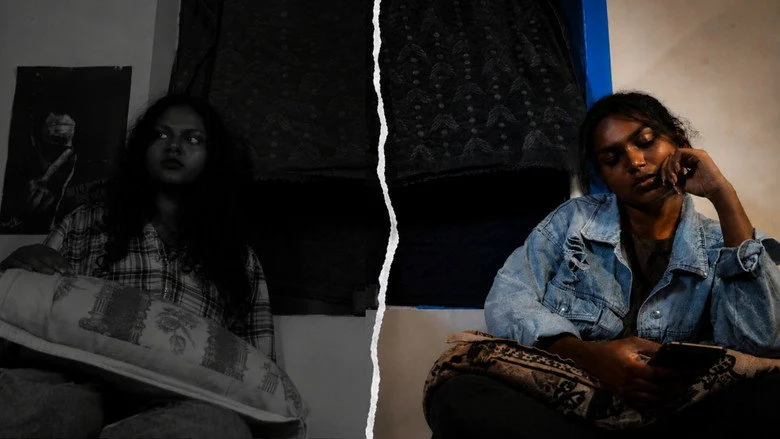
In a compact 33-minute frame, Harini Parthibanraj’s Ananya Iris is a woman possessed by a single, terrible certainty: something catastrophic is about to unfold inside her own home. The film opens on her quiet desperation, the kind of panic that doesn’t scream but whispers through clenched teeth.
Parthibanraj rarely gets a moment of stillness, and she uses every second to make Ananya’s fear feel lived-in. Her eyes do the heavy lifting where the sparse dialogue refuses to, and that restraint turns a simple premise into a genuinely tense watch.
Gauthaam’s Direction Favors Economy Over Exposition
Director Gauthaam understands the power of a short runtime. He doesn’t waste frames on backstory or world-building, trusting the audience to catch up with the speculative-fiction logic as it unfolds.
The one flaw is that this economy occasionally tips into obscurity. The rules of the fantasy element are never fully clarified, leaving a few plot threads dangling in a way that feels less like mystery and more like omission.
The Genre Core: A Thriller That Refuses to Overstay Its Welcome
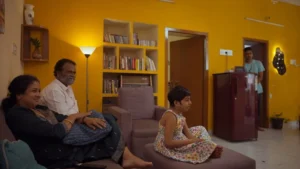
As a thriller, the film is built on a single, efficient hook: a race against an impossible event. The tension isn’t derived from a villain or a chase, but from the sheer, crushing pressure of time running out. Gauthaam stages this internal conflict with a claustrophobic eye, keeping the camera close to Ananya as she moves through her domestic space like a caged animal.
The science-fiction and fantasy elements are treated as seasoning, not the main course. There are no grand visual effects or elaborate setpieces; instead, the speculative premise serves as a catalyst for the human drama. This is a smart choice for a short film, prioritizing character stakes over spectacle.
However, the genre blending does leave a gap. The film hints at a larger mythology, particularly through the voice performances of Rinthiya and Sakthi Nivashini, but never commits to exploring it. The result is a thriller that satisfies on a visceral level but leaves the intellect slightly hungry.
If tense, compact storytelling in the Tamil language is your preference, you might want to browse more Tamil Thriller reviews.
Supporting Voices Add Texture to a Sparse Soundscape
Poompavai, as Anusiya, provides a grounding presence that contrasts sharply with Ananya’s spiraling anxiety. Her performance suggests a stability that makes the impending tragedy feel even more devastating, even if her screen time is brief.
The voice cast, led by Rinthiya as Sobiga and Sakthi Nivashini as Navya Iris, creates an eerie, disembodied layer to the narrative. Swetha M, who plays the physical Sobiga, delivers a performance that feels intentionally fragmented, mirroring the film’s own fractured sense of reality.
The Audience Angle: A Niche Appeal Built on Atmosphere
There is no controversy here, no political subtext to dissect. Instead, the film’s appeal lies in its targeted craft. It is a piece designed specifically for genre enthusiasts who appreciate atmosphere over action and implication over explanation.
This is not a film for everyone. It demands patience and a willingness to sit with ambiguity. For fans of speculative fiction who enjoy filling in the blanks, this is a rewarding exercise; for those seeking a conventional narrative payoff, it might feel frustratingly slight.
Ananya’s Call is a lean, mean exercise in suspense that knows exactly what it wants to be. It’s best watched in one sitting, with the lights dimmed and your full attention on the screen. If you have 33 minutes and a taste for the cerebral, this is a solid bet.
Ananya’s Call (2026) is a sharp, atmospheric thriller that earns a solid 3 out of 5 for its tense direction and committed lead performance.
For a different take on measured storytelling, see how Musafir Cafe review handles romantic restraint.
If you prefer a more poetic approach to narrative, Souls Wind verdict offers a contrasting vision.

Ankit Jaiswal is the Chief Author, covering Indian cinema and OTT releases with honest, no-filler criticism. An SEO strategist by background, he brings a research-driven approach to film writing, cutting through hype to tell you exactly what's worth your time.