The Dark Heaven (2026): A Hill-Station Murder Mystery That Trips Over Its Own Secrets
Verdict first: Balaaji’s The Dark Heaven is a 147-minute crime thriller that arrives with the swagger of a film that knows exactly how to unsettle you, and then, somewhere past the interval mark, forgets which of its three movies it wants to be. It is genuinely gripping for roughly seventy minutes. The remaining seventy-seven are a negotiation.
The premise is a gift: Mekkarai, a hill village where men die in June on a seven-year cycle, a library book titled Dark Heaven that seems to pre-write those deaths, and a freshly posted inspector (Sidhu Sid) who refuses to file any of it under “curse.” Balaaji, who also wrote the screenplay, opens with the confidence of someone who has studied the genre’s mechanics. The village is shot, by cinematographer Manikandan BK, with an intimidating verticality, all misted ridgelines and cramped interiors, and Sakthi Balaji’s background score does the heavy lifting of convincing you that something is listening.
The First Half Earns Its Tension Honestly
What works, works because Balaaji stages investigation as accumulation rather than revelation. The inspector’s arrival sequence, a jeep crawling up switchbacks while the score holds a single sustained note, establishes jurisdiction as an act of trespass. From there, the film builds suspicion with real patience: the librarian’s backstory, the daughter who returns twenty-five years later, Vela Ramamoorthy and Nizhalgal Ravi’s village elders who each get one scene too many of shifty eye contact. The masked violinist from the trailer is deployed sparingly, and the book itself is handled as a prop rather than a thesis, which is the right instinct.
The tagline, “The devil has not gone”, is doing more narrative work than most of the dialogue, and that’s fine. In the first half, the film understands that atmosphere is a form of argument.
Three Movies Fighting For One Screenplay
Then the second half arrives with a book, a curse, and a psycho killer, and Balaaji decides to keep all three plates spinning instead of setting two down. This is where the editing, which should have been the film’s enforcer, goes soft. The Cinema Express review put it plainly: the film is “an intriguing crime thriller with a tense first half and an edge-of-the-seat climax, despite confusing threads in the second half.” That’s a generous framing. What actually happens is that each new thread dilutes the last one’s menace. The curse becomes a red herring, then the book becomes a red herring, then the killer becomes a red herring, and by the time the climax delivers its genuinely unpredictable reveal, you’ve spent forty minutes being trained not to trust the film’s own signals.
The climax itself is the film’s best argument for its own existence, Balaaji keeps the killer’s identity sealed until the final movement, and the reveal lands because the staging refuses to underline it. But a good twist cannot retroactively discipline a flabby midsection.
Sidhu Sid Anchors What He Can
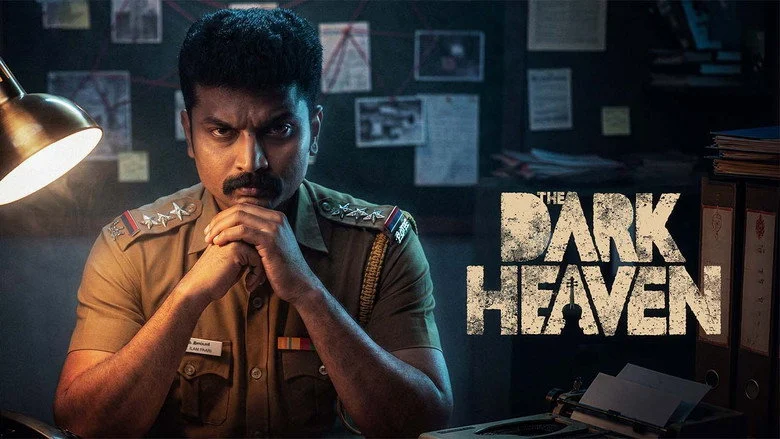
Sidhu Sid, transitioning from television, plays the inspector with a determined ordinariness that suits the material, no movie-star tics, just a man asking questions in rooms that don’t want them asked. The role is underwritten in the back half, but he never overcompensates. Tharshika and Rithvika are given measured emotional beats and make their presence felt within those limits; the complaint isn’t their performance but the screenplay’s refusal to let either woman hold a thread of her own. For a recent Tamil thriller that likewise leans on a single performer to carry structural instability, our review desk’s take on Mahendragiri Varahi review covers similar ground, a film whose lead is doing more than the script deserves.
Where The Dark Heaven genuinely distinguishes itself is in its refusal to resolve the supernatural question cheaply. Unlike the sequel logic that powers something like Sardar 2 verdict, where escalation substitutes for investigation, Balaaji’s film stays committed to the inspector’s rationalism even when the filmmaking around him is trafficking in dread. That’s a real formal tension, and it’s the most interesting thing here.
The Verdict
The Dark Heaven is a first feature with a first feature’s problems and a first feature’s promise. It knows how to open a mystery and how to close one; it does not yet know how to hold one. The hill-village texture, the score, and the climax are worth the ticket. The second act is a tax you pay for them.
Watch it if you’re a crime-thriller devotee who values atmosphere and a genuinely earned twist over narrative hygiene. Skip it if you need a single clean thread, this film will make you work for a payoff it doesn’t always deserve. Regular theatrical is the right format; the scale is real but not IMAX-real. As we frequently examine across Tamil Thriller reviews, Tamil thrillers are currently caught between atmospheric ambition and structural discipline, and this one sits squarely on that fault line.
Rating: 3/5

Ankit Jaiswal is the Chief Author, covering Indian cinema and OTT releases with honest, no-filler criticism. An SEO strategist by background, he brings a research-driven approach to film writing, cutting through hype to tell you exactly what's worth your time.