Drishyam: The Conclusion (2026): Ajay Devgn’s Stillness Holds A Sequel That Mistrusts Its Own Answers
Vijay Salgaonkar begins this film as a man who has already buried a body, rebuilt a family, and out-argued an entire police force. The interesting problem with Drishyam: The Conclusion is that it never quite decides whether that makes him a legend or a man running out of road.
Abhishek Pathak’s sequel reopens the wound with new evidence and a fresh investigator, then spends two and a half hours asking whether the Salgaonkar family’s famous composure can survive a second siege. The answer is complicated, and so is the film.
For a franchise built on the cruel elegance of one man’s memory, this installment often feels like it’s reciting its own greatest hits rather than writing new ones. That’s a problem, because the audience already knows the tune.
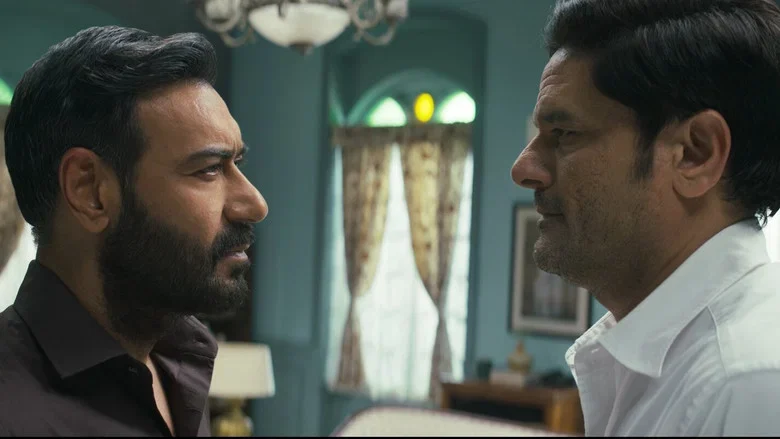
Ajay Devgn’s Best Weapon Is Still Silence
Devgn’s Vijay has always been a performance of withheld information. Here, he doubles down: shoulders squared, eyes level, dialogue delivered as if every sentence costs him something.
The restraint works best in the film’s quieter pressure-cooker moments, a family dinner where nobody eats, a police station corridor where he lets a silence stretch one beat too long. Devgn understands that Vijay’s power is not what he says, but how little he needs to.
It’s a deliberate contrast to the louder, more theatrical work he’s done in recent action outings, and it confirms that this is the register where he’s most dangerous. When the script hands him a monologue in the third act, the film briefly wobbles, Devgn is better when he’s not explaining himself.
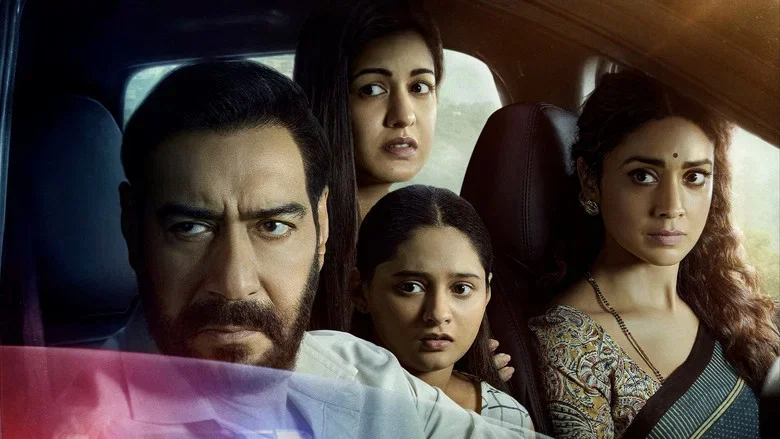
Jaideep Ahlawat Brings A New Kind Of Threat
The smartest decision in this sequel is casting Jaideep Ahlawat as Crime Branch officer Rajveer Singh Tomar. He doesn’t play the role as a snarling villain; he plays it as a man who has read the file, noticed the inconsistency, and refuses to be charmed.
His best scene is a slow, almost polite interrogation where he never raises his voice. The tension comes from the way he leans back, lets Vijay finish, then asks the one question nobody prepared for. It’s a masterclass in making procedure feel personal.
Tabu’s Meera Deshmukh remains the film’s emotional engine, her grief has calcified into something colder, and she plays it with a stillness that makes her more frightening than any shouting match could.
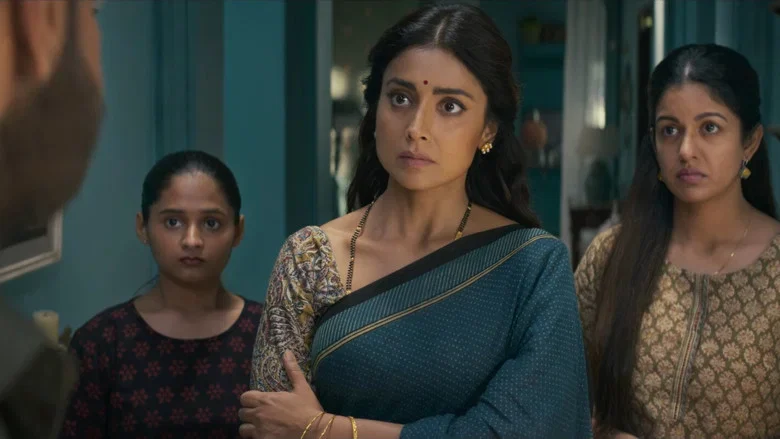
The rest of the ensemble, the Salgaonkar daughters, the extended Deshmukh relatives, are largely reduced to reaction shots and doorway appearances. They exist to remind us of the stakes, not to complicate them.
A Climax That Earns Its Tension, Then Over-Explains It
The final confrontation is the film’s strongest stretch. Pathak stages it with tight framing and a score that knows when to drop out entirely, letting the sound of footsteps and breathing carry the dread.
There’s a moment involving a misplaced object and a split-second timing choice that genuinely lands, the kind of thriller choreography that reminds you why this franchise worked in the first place. For about fifteen minutes, the film is genuinely gripping.
Then the explanations start. And keep starting. The film’s biggest structural flaw is its refusal to trust the audience with ambiguity; every clever move Vijay makes is subsequently narrated back to us, as if the screenplay is afraid we weren’t paying attention.
For a story about a man who wins by saying less, the ending talks far too much.
For a sharper example of a thriller that respects its own silence, see our take on Don't Trouble the Trouble, which understands that mystery is a mood, not a mechanism.
Where The Sequel Loses Its Footing
The first half is all setup and simmering suspicion, and it works, barely. The second half delivers the payoff, but the payoff is uneven. Some reveals feel earned; others feel like the writers needed a third act and reached for the nearest twist.
Critics who’ve argued the answers don’t fully convince have a point. The film wants to be a psychological duel, but it keeps interrupting itself with procedural busywork that dilutes the tension it worked so hard to build.
It’s a shame, because when the film trusts its actors and its atmosphere, it’s genuinely effective. When it trusts its own cleverness, it stumbles.
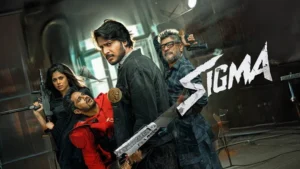
Also on our review desk: our take on Sigma, another thriller that struggles to convert a strong central performance into a fully satisfying whole.
The Verdict: A Franchise Sequel That Remembers Everything Except Restraint
Drishyam: The Conclusion is not a failure, but it’s not the knockout the franchise deserved either. Devgn and Ahlawat give it real weight; the screenplay gives it too much to carry.
Fans of the series will find enough to admire in the performances and the final act’s tension. Newcomers will wonder what all the fuss was about, and they wouldn’t be entirely wrong.
As we frequently examine across our film desk's ongoing coverage, sequels live or die on whether they justify their own existence. This one justifies it just enough.
Watch it if: You’re invested in the franchise, or you want to see two of Hindi cinema’s finest actors trade silences in a police station.
Skip it if: You want a thriller that trusts you to figure things out on your own.
Rating: 3/5

Ankit Jaiswal is the Chief Author, covering Indian cinema and OTT releases with honest, no-filler criticism. An SEO strategist by background, he brings a research-driven approach to film writing, cutting through hype to tell you exactly what's worth your time.