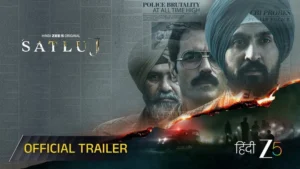
Satluj (2026): Diljit Dosanjh Anchors a Harrowing but Uneven Human Rights Drama
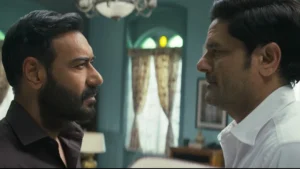
In 1994 Punjab, an activist sits across from a high-ranking official, sliding a folder of evidence across the desk, not with triumph, but with the quiet, exhausted certainty of a man who knows the system will punish him for finding the truth. That scene, anchored by Diljit Dosanjh’s coiled restraint, is the pitch-perfect opening that Satluj (2026) rides for nearly two hours before its grip begins to loosen.
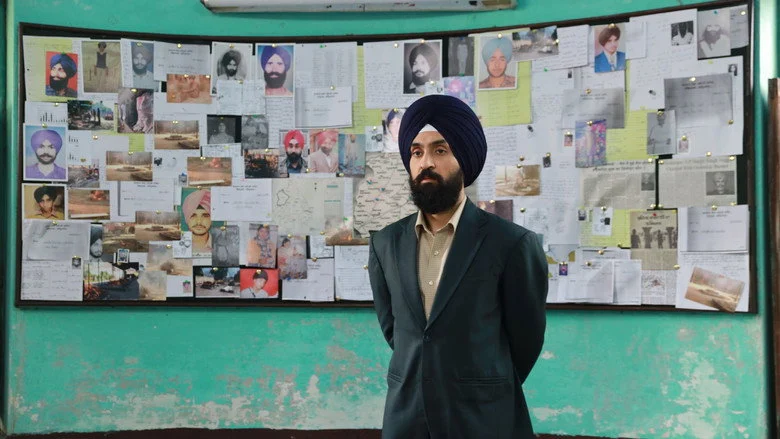
Diljit Dosanjh Makes Silence His Loudest Weapon
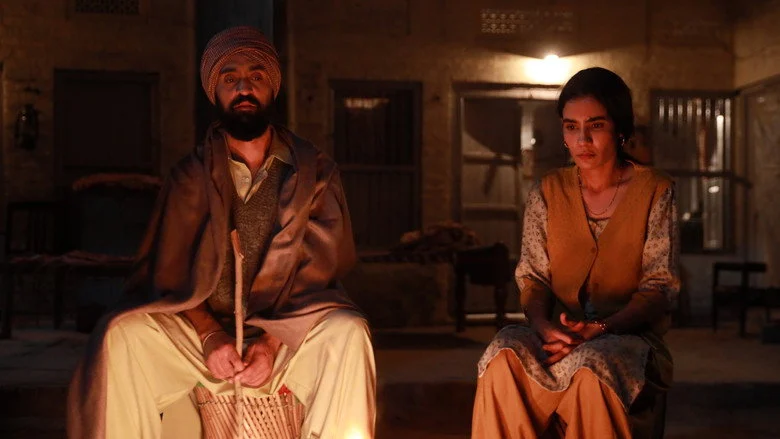
Dosanjh plays Jaswant Singh Khalra not as a roaring martyr but as a man whose determination feels almost pathological. His early investigation scenes are defined by a quiet stillness, he listens more than he speaks, and when he does confront officials, the anger comes in short, trembling bursts rather than speeches.
The abduction sequence, widely praised across critical response, is his finest moment here. With minimal dialogue and only the tightening of his jaw, Dosanjh conveys a fear that never tips into melodrama, a rare discipline in a performance that could have easily reached for bombast.
Honey Trehan’s Direction Thrives in Tension, Falters in Resolution
Trehan builds the first two acts with a confident, lean hand, every scene of surveillance, every compromised ally, tightens the screw. The period-accurate costuming and muted, dust-choked cinematography root the film in a specific, suffocating reality.
But the final act collapses into exposition. The courtroom-style revelation, where documents are laid out to expose the cover-up, slows the momentum to a crawl. One wishes Trehan had trusted the images he so carefully constructed rather than spelling out every truth in dialogue.
Genre-Core Execution: A Drama That Holds Its Breath Too Long
As a historical drama, Satluj succeeds most when it trusts silence. The abduction scene, shot with high contrast, the frame closing in on Dosanjh’s face as a van door slides shut, is the film’s genre peak: no music, no speech, only the weight of an inevitable erasure. It is the kind of scene that should define the entire work.
Yet the screenplay, structured as a linear investigation, loses its edge in the final stretch. The transitions between phases of Khalra’s probe feel abrupt, as if whole scenes were trimmed without care for narrative rhythm. The second half drags, and the film’s 2-hour-43-minute runtime becomes a liability rather than an ambition.
The central conflict, a righteous man against a faceless state, is powerful in concept but diluted by the absence of a clear antagonist. The implied corrupt officials, played with cold bureaucratic blankness, lack personal motivation. The result is a drama that fights a shadow, not a person.
For those who appreciate intense, historically-rooted storytelling, there’s plenty more to explore in our collection of Hindi Drama reviews.
Arjun Rampal Provides Anchor but Little Arc
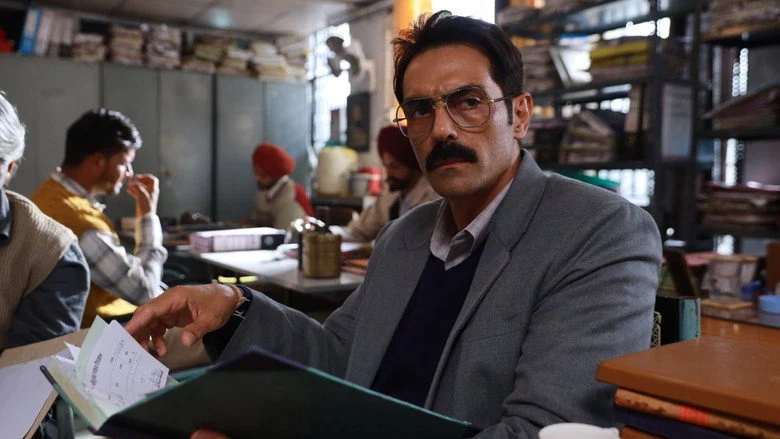
Rampal’s role is described in available sources as a grounding presence in the mid-act scenes, and that is both accurate and limiting. He brings a lived-in gravity to his exchanges with Dosanjh, but his character never gets a moment of his own, no backstory, no turning point.
Given the quality of the actor, this feels like a missed opportunity. His casting signals an intention to add weight to the supporting structure, but the screenplay never delivers on that promise. He remains a vessel for concern rather than a character who acts.
The Censorship Battle That Shaped the Film
Satluj arrives with a significant backstory: the CBFC initially demanded 120 cuts before the film was released uncut after a title change from “Punjab 95” to “Satluj”. That struggle is not visible on screen, the film never feels compromised or sanitized, but it explains why the final act leans so heavily on implication rather than direct confrontation.
Audience response, though not quantified in hard scores, has praised the film’s tense first two acts and Dosanjh’s performance, while complaints centre on the sluggish, exposition-heavy ending and a runtime that overstays its welcome. The film knows its subject intimately, but it struggles to know when to let go.
Satluj is a film to watch on ZEE5 Global, ideally in one sitting, with the patience to sit through a flawed final act for the sake of two hours of genuinely gripping historical drama. It does not give you the catharsis of a clean villain, because that is not the point, the point is that the system does not break; it buries. That truth is heavy, and the film carries it unevenly, but honestly.
Satluj earns a 3 out of 5 for its lead performance and first half, but a tighter edit and a braver climax could have made it essential viewing rather than merely commendable.
For those drawn to the personal cost of dissent, Alpha review.
If you want a historically anchored drama that understands the cost of silence, Alpha verdict.

Ankit Jaiswal is the Chief Author, covering Indian cinema and OTT releases with honest, no-filler criticism. An SEO strategist by background, he brings a research-driven approach to film writing, cutting through hype to tell you exactly what's worth your time.