G.D.N (2026): Madhavan’s Biopic Gamble on an Industrial Visionary Worth Taking
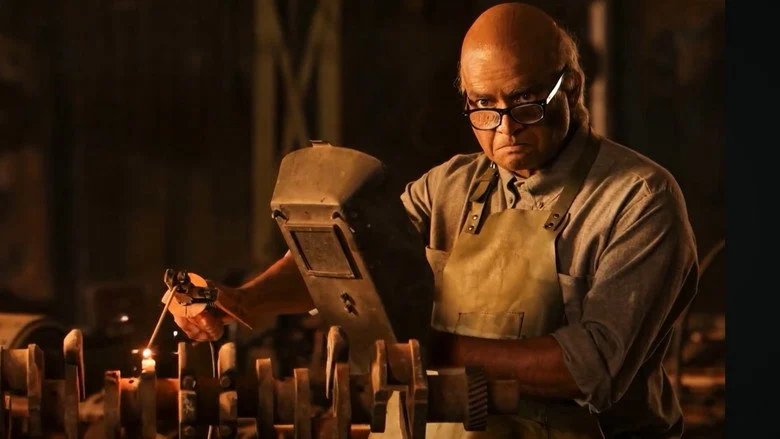
The frame holds on Madhavan’s eyes as his character watches a machine he built sputter to life, and you see it, the quiet ache of a man who sees tomorrow but is forced to live in someone else’s yesterday. This is the beating heart of Krishnakumar Ramakumar’s period drama, a biopic that understands its subject’s loneliness more than his triumphs.
Madhavan, who also co-wrote the screenplay, delivers a performance of controlled intensity. He never grandstands; instead, he lets the frustration of a visionary repeatedly blocked by “powerful forces” simmer beneath a placid surface. It is a risk-led gamble that pays off because the actor trusts the silence.
Ramakumar’s Direction Finds Poetry in Gears and Grievances
The director’s strength lies in staging the mundane, patent offices, factory floors, bureaucratic waiting rooms, with a tension usually reserved for thrillers. You feel the weight of every rejected idea, every closed door.
But the screenplay, co-written with Madhavan, stumbles when it tries to compress decades of industrial history into tidy dramatic beats. The middle act meanders, and a few supporting characters appear only to service the plot, not to breathe. It is a specific flaw that keeps the film from being definitive.
The Genre-Core Execution: A Biopic That Respects Its Subject
Biopics live or die on their ability to make you care about a life you already know the ending to. Here, the craft leans on atmosphere, dusty workshops, period-accurate costumes, and a muted color palette that suggests a world not yet ready for its protagonist’s brilliance. The film doesn’t rush to the “greatest hits” of Naidu’s life; it sits in the struggle.
The central conflict, a lone inventor versus institutional resistance, is rendered with a patience that will frustrate viewers expecting melodrama. There is no villain twirling a mustache; the enemy is inertia itself. Ramakumar shoots this resistance in boardroom stares and polite refusals, which is more chilling than any explosion.
Where the film truly commits is in its refusal to modernize Naidu’s story with anachronistic wit. The period setting feels lived-in, not costumed. It is a quiet, deliberate choice that signals respect for the man and his era, even when the pacing suffers for it.
A Supporting Cast That Grounds the Vision
Priyamani brings a steely pragmatism to her role, serving as the emotional anchor in scenes where Madhavan’s character drifts into obsession. Her silent reactions during a key failure sequence say more than any dialogue could.
Yogi Babu and Karunakaran provide the film’s only levity, but their comedy never undercuts the gravitas. Meanwhile, Richard Bhakti Klein as Robert Stanes and Ved Maddison as Winston Smith represent the colonial establishment’s condescension with chilling politeness, these are men who smile while they crush ambition. Sathyaraj and Jayaram, though underused, lend heft to the ensemble, making the world feel more populated than the script allows.
Audience Reception and the Politics of a Forgotten Pioneer
This is a film aimed squarely at fans of biographical dramas and students of Indian industrial history. It makes a quiet political argument by simply existing: that a man like G.D. Naidu, an inventor, a manufacturer, a self-made industrialist, deserves a place in the national memory. The film’s very premise is a corrective to a historical record that favors politicians over engineers.
There is no manufactured controversy here, no censorship battles. Instead, the conversation around G.D.N. is about representation, who gets remembered, and who gets erased. For Tamil audiences, this feels personal, and the film’s release on 17 July 2026 positions it as a festival-season counter-programming choice.
For those who want to see how this compares to other recent attempts at honoring regional icons, our Tamil Drama reviews cover the spectrum.
If you are a Madhavan fan, this is essential viewing, a reminder that his range extends far beyond the romantic lead. If you need explosions and rapid-fire dialogue, look elsewhere. Watch this on a quiet evening, on the biggest screen you have, and let the film’s deliberate pace work its spell. It is a history lesson that feels like a eulogy.
For a similar register of a debut director wrestling with big themes, Thudakkam review offers a comparable study in restraint.
G.D.N. is a flawed, slow-burning tribute that earns a 3.5 out of 5, a film that values its subject’s integrity over your entertainment, and is better for it.
Those seeking a bloodier take on ambition should check DC verdict.

Ankit Jaiswal is the Chief Author, covering Indian cinema and OTT releases with honest, no-filler criticism. An SEO strategist by background, he brings a research-driven approach to film writing, cutting through hype to tell you exactly what's worth your time.