Love Insurance Kompany (2026): Shivan’s Tech-Romance Stumbles on Repetitive Messaging
In Chennai 2040, a man who refuses to carry a phone falls for a woman whose every life choice flows through an algorithm called Love Insurance Kompany. The premise gleams with satirical potential, a romance born in defiance of the very app that promises to optimize it, yet Vignesh Shivan’s execution wavers between sharp observation and exhausted repetition.
Pradeep Ranganathan carries the film as Vibe Vaasey, the voice behind the LIK app itself, living a contradiction that should bristle with dramatic irony. His chemistry with Krithi Shetty’s Dheema anchors the central romance, though the screenplay too often resorts to lecturing rather than letting their opposing worldviews collide naturally on screen. The conflict itself, genuine human connection versus algorithmic certainty, remains the film’s most honest moment, yet Shivan allows it to repeat until it dulls.

**Shivan’s Futuristic World-Building Dazzles Before the Writing Falters**
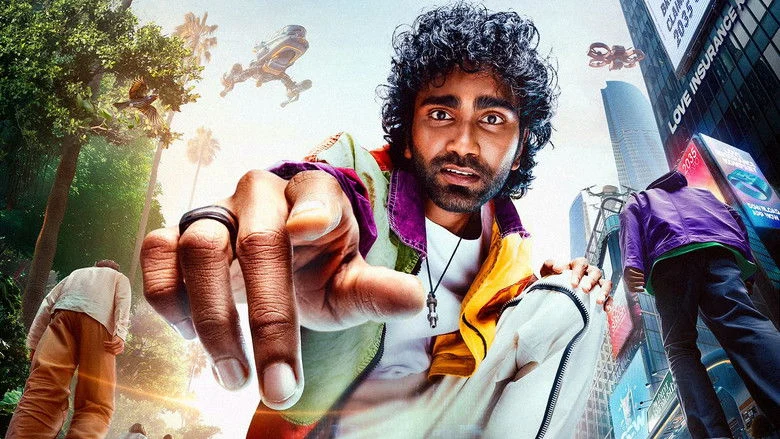
The director constructs a believable 2040 Chennai: monorails slice through skylines, hospitals gleam with technology, drones ferry packages through neon-lit streets. This production design alone signals ambition. Yet the screenplay that inhabits this world collapses under its own weight, hammering the same anti-technology message across two hours and thirty minutes without the wit to make repetition feel intentional.

**Ranganathan’s Contradiction Never Fully Ignites the Premise**
Vaasey’s central paradox, the architect of algorithmic love living phone-free, should generate constant friction. Instead, Ranganathan plays the role more as earnest romantic than as someone genuinely at odds with his own creation. The performance lands comfort where it should land conflict.
**The App’s Takeover Peaks, Then the Film Coasts on Familiar Warnings**
When the LIK algorithm stops suggesting and starts controlling, the narrative finds its sharpest edge. In this peak moment, the romance collapses not from misunderstanding but from external systems actively rewriting their choices. Shivan demonstrates confident writing here, balancing humor with genuine unease.
Yet this peak proves temporary. The film retreats into broader warnings about technology’s corrosive effect on intimacy, territory already well-worn by a decade of Silicon Valley critique. Pop culture references sprinkle throughout, attempting to anchor the philosophy in recognizable touchstones, but they feel scattered rather than woven.
The rom-com structure itself works competently. Two opposing worldviews, mutual attraction, mounting obstacles, these beats land where expected. The film entertains when it trusts its genre instincts rather than its sermon.
**SJ Suryah’s Suriyan Suggests Depth the Script Refuses to Grant**
As the mysterious leader of the LIK app, SJ Suryah plays a man who may or may not understand the monster he’s created. His presence hints at a richer villain than the screenplay actually provides, someone caught between genuine belief in algorithmic optimization and its unintended consequences. Suryah elevates the thinness around him.
**Seeman’s Organic Commune Frames an Ideological Tension the Film Never Fully Explores**
Vaasey’s father runs a place where existence without a phone constitutes the harshest punishment, a concept ripe for philosophical interrogation. Seeman’s presence as Anbukadal signals that this conflict runs generational, yet the film treats it more as personality quirk than genuine ideological divide.
The verdict lands uneasy: Shivan has crafted a film with genuine ideas trapped inside a screenplay too cautious to let them breathe. The worldbuilding convinces. The romance entertains. But the philosophy, the beating heart of what this story might have said, gets lost beneath repetitive warnings and shallow execution of a brilliant premise. Tamil cinema romance reviews consistently grapple with balancing humor and heart; here, the scales tip toward neither with full conviction.
If you’re drawn to near-future sci-fi with romantic stakes and don’t mind didactic messaging, the film offers ninety minutes of competent entertainment before its ideas run dry. Viewers seeking genuine satirical bite about technology’s role in love should look elsewhere. Watch this on a streaming service where you can pause through the duller stretches.
Love Insurance Kompany offers enough surface charm to pass as weekend entertainment, though it squanders its premise with repetitive moralizing, a 2.5 out of 5 verdict that leans toward skip despite its ambition.
Shivan’s struggle to balance romance with science fiction philosophy echoes similar efforts in Vaazha II review, where sequels inherit thematic baggage that dilutes their core appeal.
The blend of whodunit tension and character study found in Everybody Loves verdict demonstrates how genre frameworks can support rather than strangle philosophical inquiry.

Ankit Jaiswal is the Chief Author, covering Indian cinema and OTT releases with honest, no-filler criticism. An SEO strategist by background, he brings a research-driven approach to film writing, cutting through hype to tell you exactly what's worth your time.