Vaazha II (2026): Sequel Loses the Original’s Quiet Sting
Four teenage boys slouch through a school corridor, tagged as troublemakers before they’ve even finished a sentence. The camera catches their resigned expressions, not bitter, just exhausted by the weight of being labeled. Within minutes, the film pivots into a rhythm that feels designed for short-form consumption: quick cuts, rapid-fire conflicts, moments that build and collapse like viral content.
Vaazha II arrives as a riskier venture than its 2024 predecessor, widening its scope from singular narrative focus to ensemble dynamics while simultaneously losing the emotional traction that made the first film work. Debutant director Savin S.A. inherits a proven template from Vipin Das’s screenplay, then stretches it thinner across a longer runtime, hoping charm and relatability will mask a fundamental structural flaw: the film assumes doubling the number of central characters means doubling the emotional investment.
**The School Sequences Carry What Little Substance Exists**
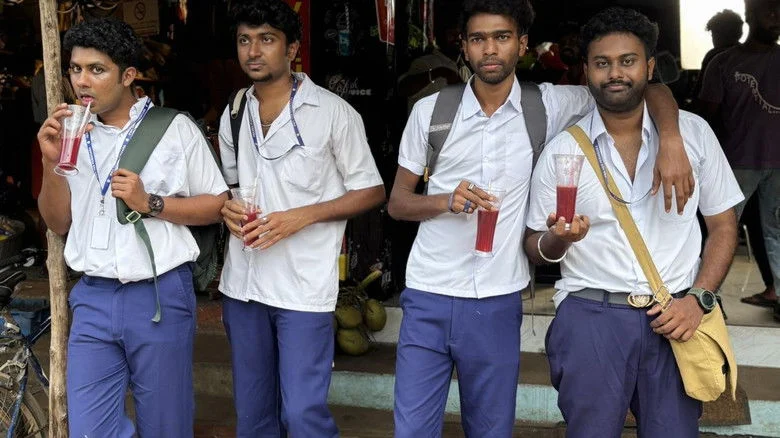
The first half unfolds almost entirely within school grounds, and this constraint works in the film’s favor. New Indian Express rated it 3/5, noting that “the first half, set largely within the school space, is easily the film’s most engaging stretch.” The confined geography forces a specificity that later sections abandon entirely. Within classrooms and hallways, the four friends, Hashir, Alan, Ajin, and Vinayak, feel grounded, their frustrations legible because the world pressing down on them is tactile and recognizable.
Once the narrative breaks beyond those gates, the film begins to self-destruct. The escalation of consequences that mirrors the original now reads as repetitive escalation, each conflict feeling manufactured to hit a predetermined emotional beat rather than emerging organically from character choice.
**Savin S.A. Mistakes Energy for Depth**
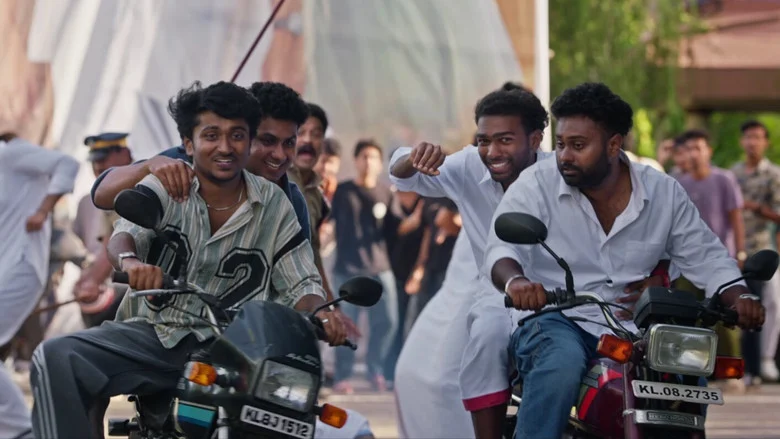
The director’s primary strength lies in orchestrating liveliness, the school sequences pulse with genuine observational humor. His weakness, however, proves fatal to a 160-minute drama: he conflates reel-like pacing with narrative momentum. According to critics, “Vaazha II feels very much like an Instagram reel expanded into a feature film, filled with humour, life lessons and a fair bit of chaos.” That observation isn’t complimentary disguised as description; it’s a structural indictment.
Where the original Vaazha found quiet power in allowing moments to breathe, this sequel refuses silence. Vipin Das’s screenplay maintains a linear structure that should permit character development, yet the writing defaults to deja vu, familiar conflicts recycled with heightened stakes rather than reconsidered through new lenses. The central quartet brings ease and familiarity to their roles, and consistently amusing moments dot the film, but these don’t accumulate into anything beyond surface-level entertainment.

**Drama’s Central Problem: Refusing to Sit With Consequence**
The film positions itself as a journey toward self-discovery and acceptance amid societal labeling, yet it treats acceptance as a destination to be reached rather than a process to be inhabited. The school sequences succeed because they’re trapped, the boys have no exit, so their resilience means something. Outside those walls, consequence flattens into visual spectacle.
Escalating conflicts dominate the second half, each moment feeling exaggerated and staged rather than earned. The screenplay explores friendship, family, school life, and romantic entanglement, but none deeply enough to justify their presence. A drama that runs 160 minutes owes its audience either profound insight or unbearable tension, this film delivers neither, settling instead for consistent amusement masquerading as narrative depth.
The editing by Kannan Mohan amplifies this problem. What works as pacing in the first half becomes frenetic in the latter sections, the film jumping between emotional registers with the attention span of a social media feed. Where pause might have elevated the material, the editor opts for perpetual forward momentum, never allowing genuine weight to accumulate.
**The Central Quartet Carries Weight They’re Not Asked to Lift**
Hashir, Alan, Ajin, and Vinayak share an effortless chemistry that suggests years of collaborative trust. Their performances benefit enormously from the school-space filming, confined quarters strip away pretense, and their scenes together radiate the kind of understated camaraderie that makes friendship dramas breathe. Yet the screenplay doesn’t ask them to stretch beyond that comfort zone.
The supporting presence of Alphonse Puthren, the filmmaker referenced in Premam callbacks, signals what this film might have been: a meditation on how youth culture intersects with cinema itself. Instead, his appearance registers as a hollow easter egg, a gesture toward thematic ambition the film lacks the patience to explore.
**No Controversy, Only Calculation**
Vaazha II generates no reported political reactions, censorship challenges, or casting controversies. Its conservatism is precisely the problem, the film knows its audience (youth drawn to school narratives, friendship themes, and social media rhythms), and it aims to deliver exactly what they expect without asking them to feel anything unexpected. The U/A certificate positions it as family-friendly entertainment, which it achieves competently but without conviction.
The ensemble approach should have deepened the emotional canvas. Instead, it dilutes focus across four protagonists without granting any single character sufficient space to transform. The film remains a pleasant, competently assembled sequel that mistakes its own likability for substance.
If you’ve connected with coming-of-age stories that honor the messy specificity of adolescence, this sequel will disappoint, it opts for Instagram-ready moments over genuine emotional archaeology. The first half merits a watch for those with patience for the second half’s repetitive conflicts; others should revisit the original instead, which understood that sometimes the smallest spaces contain the largest truths.
Similar explorations of male friendship through observational drama have tested whether charm sustains narrative, and Everybody Loves review offers an instructive comparison in how ensemble dynamics either deepen or diffuse emotional stakes.
Vaazha II: Biopic of a Billion Bros trades the intimate sting of its predecessor for sprawling likability, emerging as a competent but hollow sequel that confuses reel-like energy with dramatic substance, a 3/5 venture that squanders its central quartet’s chemistry on recycled conflict.
Darker tonal shifts in youth narratives have proven more artistically rewarding, as demonstrated in the stylistic choices explored within Bharathanatyam 2 verdict.

Ankit Jaiswal is the Chief Author, covering Indian cinema and OTT releases with honest, no-filler criticism. An SEO strategist by background, he brings a research-driven approach to film writing, cutting through hype to tell you exactly what's worth your time.