Bandar (2026): Bobby Deol Carries Kashyap’s Accusation Thriller Through Institutional Collapse
A fading television star’s world implodes when his ex-girlfriend accuses him of rape, thrusting him into the machinery of a corrupt legal system that cares nothing for truth. Bobby Deol’s Samar isn’t a hero fighting back, he’s a man watching his reputation disintegrate while institutional power closes in from every angle, and Anurag Kashyap’s crime-thriller doesn’t flinch from the moral ambiguity that follows.
This is a film about systems eating people alive, not about solving a puzzle. That distinction matters.
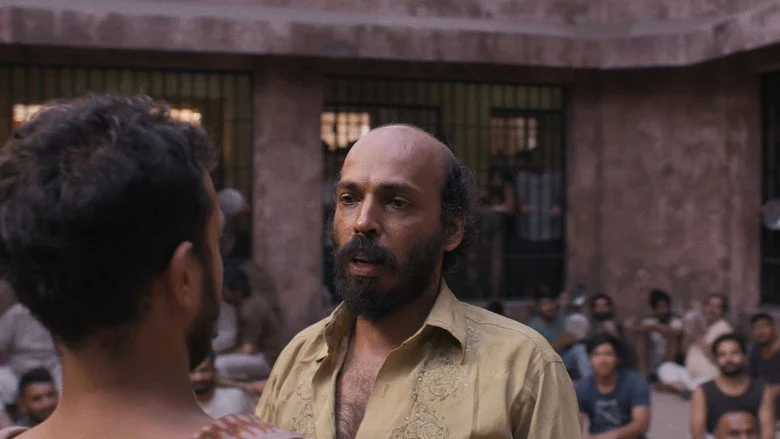
Bobby Deol’s Vulnerability in a Rigged Game
Deol’s casting as Samar signals a deliberate refusal to offer audience comfort. He plays a man in freefall, once a public figure whose fame is already corroding, now facing an accusation that weaponizes his own visibility against him. The role demands he inhabit denial and desperation without ever fully controlling the narrative. He carries the weight of a thriller’s central target, not its hero.
What makes this work is Deol’s willingness to let Samar remain fundamentally uncertain. He doesn’t perform innocence as a clean virtue; instead, he registers the slow erosion of certainty itself.
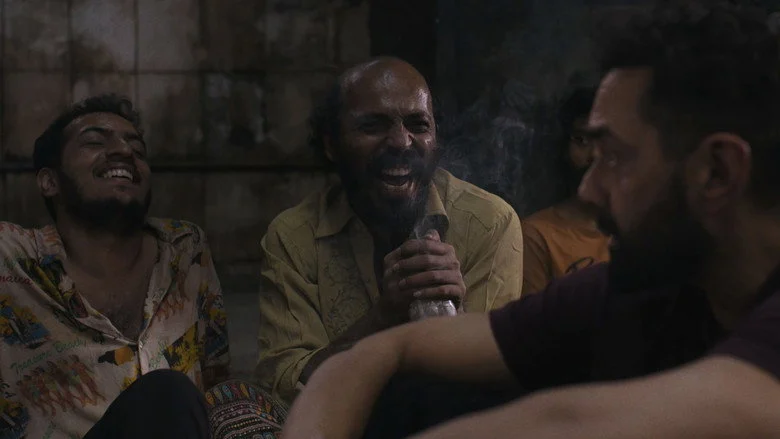
Kashyap’s Direction Shapes Suspense Through Legal Pressure
The director constructs suspense not through revelation but through the tightening grip of institutional machinery. His strength lies in making the corrupt legal system itself feel like a breathing antagonist, one that operates through procedure, indifference, and shifting alliances rather than a named villain with clear motives. The accusation becomes the inciting incident that proves how fragile a person’s standing is once the state decides to bear down.
Where the screenplay stumbles is in its reliance on abstraction when specificity would land harder. The film tells us the system is corrupt; it shows us Samar drowning in it, but the mechanism of that drowning remains occasionally obscured by psychological pressure rather than crystallized dramatic detail.

Thriller Craft Built on Accusation, Not Action
The film abandons conventional thriller mechanics, no chases, no set pieces, no climactic confrontations that resolve through force. Instead, Kashyap builds tension through the accusation itself and Samar’s arrest, deploying shifting alliances and hidden motives as the primary tools of narrative momentum. The central conflict lives in courtrooms and holding cells, in the gap between what happened and what can be proven.
The confrontation implied when Samar blocks Gayatri before the allegation carries different weight than it would in a conventional crime drama, it’s not a plot point but a moment of human disconnection that becomes legally weaponized. This is crime-thriller filmmaking that prioritizes psychological stakes over procedural clarity, and that choice carries both strength and limitation.
The struggle against the corrupt legal system after detention forms the emotional and narrative core. The film doesn’t hide the machinery; it lets us watch it work, indifferent to innocence or guilt, powered only by institutional momentum and the people who profit from its inertia.
Audiences interested in how these themes unfold across Hindi cinema will find similar institutional critique in other recent work. Explore Hindi film reviews to see how contemporary crime dramas are interrogating power and accountability.
Sanya Malhotra’s Gayatri and Saba Azad’s Emotional Contrast
Sanya Malhotra carries the triggering force of the entire narrative as Gayatri, the ex-girlfriend whose accusation destabilizes Samar’s existence. Her role is structural rather than verbose, she functions as the catalyst whose presence forces the legal machinery into motion, and the film’s refusal to over-explain her motives or backstory leaves necessary ambiguity intact. This is casting that trusts the audience to sit with discomfort rather than resolve it neatly.
Saba Azad’s Khushi serves as Samar’s relationship anchor and emotional contrast to the accusation plot. She represents the life Samar is trying to build before Gayatri’s return collapses everything, and her presence deepens the stakes by forcing the audience to watch him lose connection to the people closest to him as the legal system swallows his attention.
The Film’s Refusal to Provide Moral Clarity
The research suggests the film premiered to positive reception at Toronto International Film Festival, positioning itself as a serious institutional critique rather than a genre exercise. What emerges from that framing is a thriller uninterested in innocence as a narrative category, instead, it explores how accusation, power, and institutional corruption create a space where truth becomes irrelevant.
The film offers no convenient resolution that cleanses the moral landscape. That’s either its greatest strength or its most frustrating limitation, depending on what you bring to it. I find myself respecting the choice even when the execution occasionally loses precision.
If you’re drawn to Kashyap’s sensibility and comfortable with moral ambiguity served without reassurance, this is essential viewing. Casual thriller audiences seeking resolution and clear antagonists should prepare for a deliberately unsettling experience. Watch it in theatrical format, where the accumulated pressure of institutional machinery lands harder than it would on a smaller screen.
The film’s thematic DNA shares ground with recent examinations of male vulnerability in crisis scenarios; Hai Jawani review tackles relationship collapse from a different genre angle.
Bandar proves that contemporary Hindi crime cinema can interrogate institutional failure and male fragility without offering easy answers, a 3.5/5 film that respects the viewer’s intelligence more than it comforts their worldview.
Kashyap’s formal control mirrors the procedural precision found in Made Korea verdict, where location and constraint shape character pressure.

Ankit Jaiswal is the Chief Author, covering Indian cinema and OTT releases with honest, no-filler criticism. An SEO strategist by background, he brings a research-driven approach to film writing, cutting through hype to tell you exactly what's worth your time.