Main Vaapas Aaunga (2026): Imtiaz Ali’s intergenerational love story across Partition
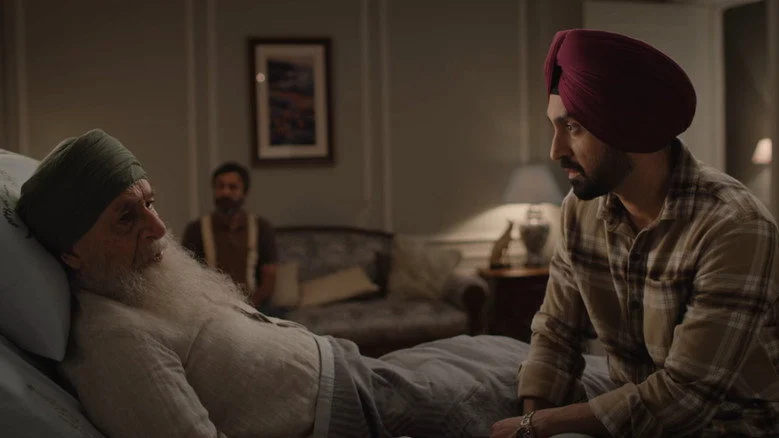
An old man sits across from his grandson and finally speaks the name of a woman he lost to Partition seventy years ago, the words arriving like a secret that has been waiting all his life to be told. What follows is not a straightforward flashback but a deliberate excavation, Imtiaz Ali’s *Main Vaapas Aaunga* treats memory as cinema, using the grandson as both listener and archaeologist, pulling the past forward not through exposition but through music, recollection, and the stubborn refusal of love to dissolve into history.
Diljit Dosanjh as the Bridge Between Eras
Diljit Dosanjh functions not as the romantic lead but as the emotional conduit, his role demanding a different register than the typical male protagonist, he listens, he prompts, he becomes the camera through which we enter his grandfather’s interior. The grandson’s journey to reconstruct his grandfather’s past through music and visual memory requires restraint rather than performance, a shift that positions Dosanjh as the film’s structural heartbeat. His presence signals that this love story belongs to two generations, not one.
Imtiaz Ali’s Partition Ache, and Its Narrative Gamble
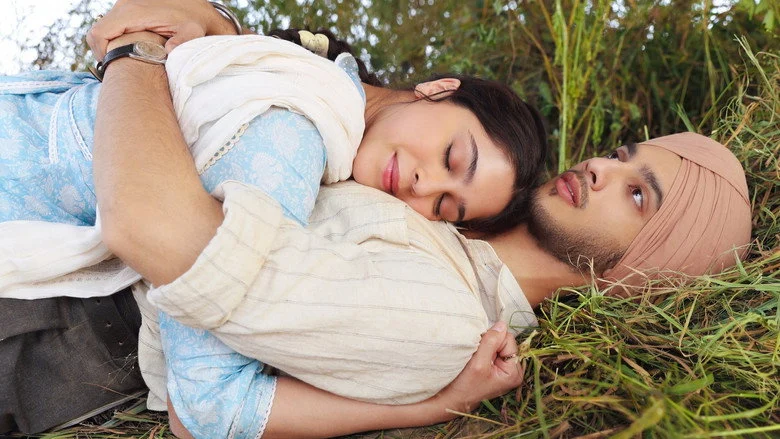
Ali builds his romance around longing rather than courtship, letting the Partition itself become the film’s true antagonist, not a villain in costume but a historical rupture that forces migration, loss, and the survival of feeling across decades. The dual-timeline structure, anchoring present-day framing within a period romance, gives historical trauma an intimate scale. The weakness lies in the risk that a 166-minute film about memory and unresolved emotion may test the patience of viewers accustomed to linear storytelling, leaving some audiences hungry for closure rather than recollection.
The Separation Sequence: When History Breaks Love
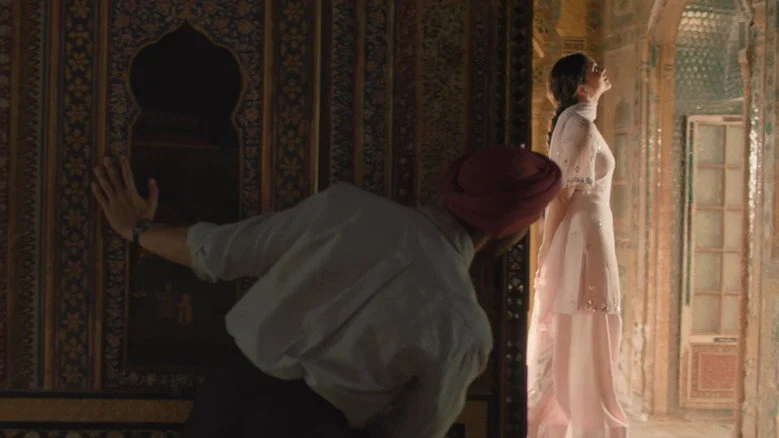
The moment Partition forces the young couple apart operates as the film’s emotional hinge, this is where private feeling collides with public catastrophe, and where Ali proves that period drama need not be decorative. The elderly man’s confession to his grandson about the love he never forgot carries the weight of all those silent years, making the intergenerational framing scene the most resonant emotional anchor the film offers.
If you’re drawn to class cinema that refuses easy answers and prefer memory over melodrama, *Main Vaapas Aaunga* rewards patience. But if you expect a conventional romance arc or a tidy reunion, the film’s insistence on emotional irresolution may frustrate more than move you.
Naseeruddin Shah and Vedang Raina anchor the dual timelines as versions of the same haunted man, each performance carrying the weight of separation and enduring longing. Sharvari Wagh becomes the emotional core of the romance’s separation, her presence defining what loss means when love outlives its object. The casting choices signal a film that respects the intelligence of its ensemble rather than centering one star.
Hindi romantic dramas with historical weight remain Imtiaz Ali’s strongest territory, explore what else the director has built around love and displacement in our Hindi Drama reviews section for more period romance analysis.
The film’s refusal to deliver a conventional happy ending or even a clear reunion separates it from standard Partition cinema, though whether that ambition lands or merely frustrates will depend entirely on your appetite for unresolved narratives. The promise “Main vaapas aaunga” repeats throughout the film as both romance and broken vow, a device that transforms a simple declaration into a meditation on what it means to return to something that no longer exists. At 2 hours 46 minutes, the runtime becomes part of the film’s statement, it moves slowly enough that you feel every year the old man has carried this love without speaking it.
For viewers who connected with similar narrative experiments like Momacu review, Ali’s approach to fractured storytelling will feel like a natural evolution.
*Main Vaapas Aaunga* is a deliberate, emotionally intelligent period romance that respects silence and unresolved longing, it earns a 3.5/5 for those willing to sit with ambiguity, though it will leave conventional audiences cold.
The intergenerational trauma and emotional architecture here share DNA with System verdict‘s examination of how history marks the body and psyche.

Ankit Jaiswal is the Chief Author, covering Indian cinema and OTT releases with honest, no-filler criticism. An SEO strategist by background, he brings a research-driven approach to film writing, cutting through hype to tell you exactly what's worth your time.