
Idhayam Murali (2026): Manoj Paramahamsa’s cinematography softens the blows of a predictable romance
In 1998, young Idhaya helps his schoolteacher through labour – a moment that blends innocence with responsibility and sets the pattern for every love that follows: unspoken, urgent, and forever out of reach. Aakash Baskaran’s coming-of-age drama runs this template across seventeen years, but never quite graduates from its own haze of nostalgia.
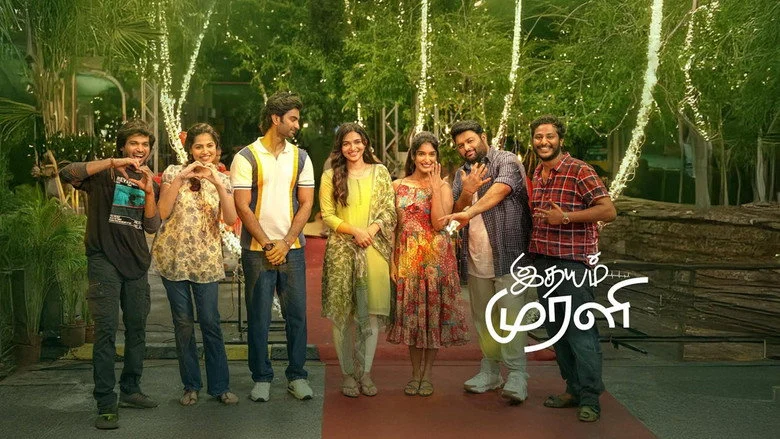
Atharvaa channels a lifetime of hesitation
Atharvaa plays Idhaya across childhood, school, college and adulthood with consistent shyness. The nostalgic introduction sequence, where little pleasures of growing up unfold, is his most effective stretch. He charms in the group-friendship scenes, but the script gives him little to do beyond look wistful.
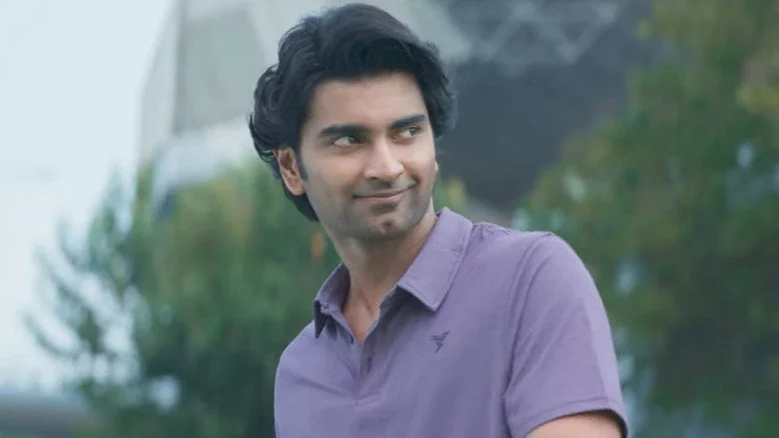
Baskaran gets the breeziness, misses the ache
The director integrates 90s/2000s nostalgia well, especially in the first half that feels effortless. But as Bhuvanesh Chandar of The Hindu noted, the film “never builds the emotional depth needed to make those moments linger.” The second half’s scaffolding collapse and the contrived airport dash reveal a screenplay that rushes its big moments.
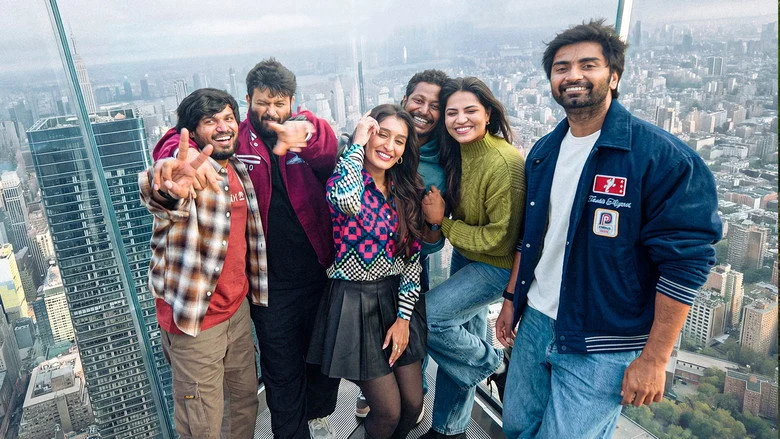
Coming-of-age on a loop: nostalgia over depth
The film uses time-tested tropes – childhood crush, high-school twin discovery, college friendship – with conviction, but they don’t always land. The teacher-hospital scene mixes innocence with adult responsibility, and the birthday-party twin reveal breaks Idhaya’s heart via a birth-magic theme that feels charming yet arbitrary.
What works is the celebration of friendship colours. Thaman S’s music keeps the mood light, and Manoj Paramahamsa’s cinematography, described by Janani K. of India Today as “one of the film’s genuine pleasures, ” elevates the most mundane moments. Yet the unrequited-love arcs – spanning childhood to adulthood – repeat the same beat: crush, miss, sigh.
The college arc, which should carry the emotional weight, feels under-written. A departure at a train station tries for pathos but lands as a familiar convenience. The film understands unspoken love, but it never builds the lingering ache that makes coming-of-age stories stick.
If you enjoy thoughtful nostalgia-driven narratives, browse more Tamil Drama reviews on our site.
Supporting cast plugs holes, unevenly
Preity Mukhundhan plays twins Samantha and Samyuktha with competence, though her reconnection scenes with Atharvaa lack spark. Kayadu Lohar’s Amudha shows a mutual friendship turning one-sided, but her dubbed voice (by Chinmayi) creates distance. Thaman S brings easy camaraderie as college friend Sachin, while Fahadh Faasil’s extended cameo as Suriya delivers the climax intervention – a deus ex machina that feels more convenient than earned. Malavika Mohanan appears briefly as Adhithi, but the role is a cameo in name only.
Audiences bought in, critics took notes
BookMyShow users gave it an 8.6/10 from over 19, 700 votes, praising the cast charm, breezy humour and Thaman’s tunes. But the softer audience reception masks a box office that tells a different tale. Sacnilk, via Times of India, reported a Day 10 India net of ₹1.46 crore, taking the total to ₹17.85 crore net against a budget of ₹25 crore (Koimoi estimate). Latha Srinivasan of NDTV called it “a somewhat satisfying romance that thrives on nostalgia, delivering a breezy, feel-good watch even if it doesn’t always strike a deep emotional chord.” After 13 days, it had recovered only 78.28% of its budget – an average verdict.
If you’re in the mood for a lightweight, visually pleasant journey across one man’s romantic stumbles, Idhayam Murali works best on a streaming platform where you can lean back and let the frames wash over you. But if you expect a coming-of-age tale with real emotional payoff, you’ll leave frustrated by how often it chokes at the finish line.
Idhayam Murali earns a generous 2.5 out of 5 – polished in texture, frustrating in its refusal to grow up.
For a film that also uses nostalgia as a tonal anchor, read our review of Uttar Da review.
The multigenerational emotional arcs in Idhayam Murali find a different rhythm in Max Min verdict.

Ankit Jaiswal is the Chief Author, covering Indian cinema and OTT releases with honest, no-filler criticism. An SEO strategist by background, he brings a research-driven approach to film writing, cutting through hype to tell you exactly what's worth your time.