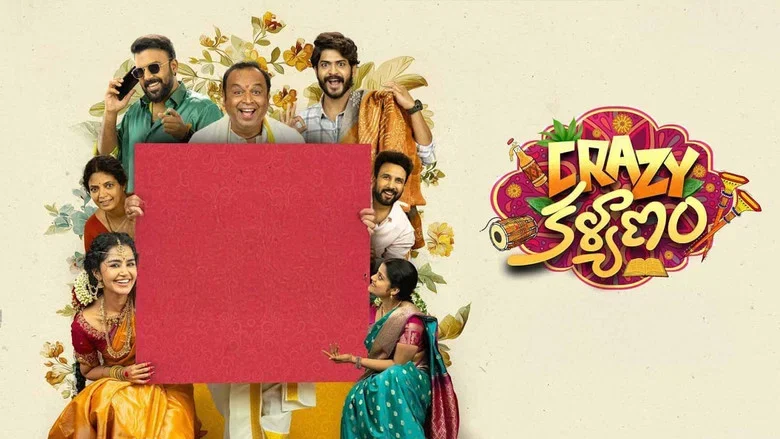
Crazy Kalyanam (2026): Anupama Parameswaran Anchors a Sincere but Uneven Rural Family Drama
The wedding invitation is printed before the daughter has agreed to the groom. Badrappa Gajula’s Crazy Kalyanam builds its entire dramatic architecture on that single, quietly devastating act of paternal presumption.
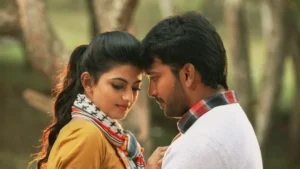
Anupama Parameswaran plays Keerthi, a young woman in rural Telangana who wants a degree and a salary before a mangalsutra. Her father wants a respectable alliance and a wedding album that will silence the village.
When A Father’s Reputation Becomes The Antagonist
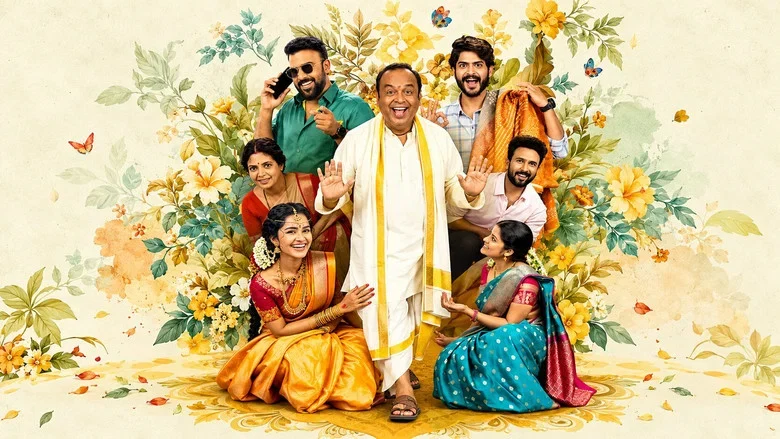
V. K. Naresh’s Parvathalu is not a villain in the conventional sense. He is a man who genuinely believes that a prestigious marriage is the safest shelter he can build for his daughter, and Naresh plays that conviction with a rigid spine and a voice that softens only when he is being observed by outsiders.
The film’s smartest structural gambit arrives when Parvathalu diverts a marriage proposal intended for his elder brother’s daughter and pulls it into his own household. That single act of domestic larceny converts a broad family comedy into a confrontation over who actually owns a young woman’s future.
Gajula’s screenplay is broadly linear, and it takes its time. The opening thirty minutes are spent introducing the household, the village, and the romantic track before the central marriage conflict properly ignites. Telugu360’s observation that the first half hour passes very slowly is difficult to argue with.
Balraju’s Drunken Disorder Is The Film’s Best Comic Engine
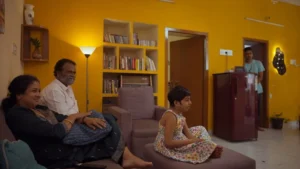
Tharun Bhascker’s Balraju, the drinking son-in-law, generates nearly all of the first half’s comic energy. His staggered returns home, the money he borrows and never returns, the arguments he provokes at the dinner table, these scenes work because Bhascker plays the embarrassment without begging for laughs.
There is a genuine thematic function buried in the comedy. Balraju’s visible misconduct exposes the gap between Parvathalu’s public performance of honour and the disorder festering inside his own walls. The film understands that reputation is a costume, and it lets the son-in-law keep pulling at the stitching.
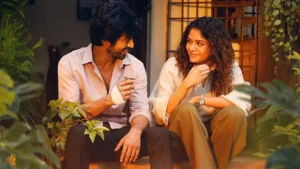
The romance between Keerthi and Uday, by contrast, offers little that a hundred Telugu films have not already offered. Akhil Raj Uddemari is pleasant and entirely unremarkable, and the love track exists mostly to give Keerthi a reason to resist her father rather than a character to fight for.
The Stillness In Naresh’s Face Carries The Second Half
The film’s most praised sequence belongs entirely to Naresh, a lengthy dramatic passage in which Parvathalu’s certainty begins to crack. He does not weep or rage. He sits, he listens, and his jaw tightens while his eyes drift toward the floor, and the room’s power balance shifts without a single raised voice.
Parameswaran meets him there with a performance built on restraint rather than tears. In the father-daughter confrontations, she keeps her chin level and her voice low, and the self-respect she refuses to surrender reads as conviction rather than defiance. It is the kind of calibrated physical control that recalls the disciplined prosecution Rajkummar Rao anchors in Prahaar, where the drama lives in what a performer refuses to give away.
What the film cannot do is earn its own ending. Parvathalu’s climactic acceptance that Keerthi must study and find work arrives as a declaration rather than a discovery, and the ideological reversal feels forced rather than prepared by everything that preceded it.
Rural Texture Without Visual Ambition
Shyam Dupati’s camera keeps the village legible, courtyards, verandahs, the low light of a family argument conducted under a tube light. The visual grammar is functional and unshowy, which suits the material, though the film rarely finds an image that lingers after the scene ends.
Suresh Bobbili’s music does the emotional lifting the screenplay sometimes fails to do, particularly in the later confrontations where the score swells to tell us what the writing has not quite established. The tonal movement from comedy to serious drama remains uneven throughout.
The film’s social argument, that parents should invest in a daughter’s education rather than in the wedding, is clear, sincere, and delivered with a bluntness that undercuts its own complexity. The screenplay resists the kinetic sensationalism that overtook Thella Kaagitham, opting instead for a deliberate, unhurried domestic register, but it never quite locates the dramatic friction that would make that patience pay off.
The Commercial Arithmetic Of A Crowded October
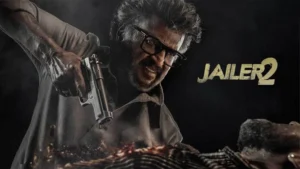
Produced by Boosam Jagan Mohan Reddy on a reported budget in the vicinity of ₹1 crore, Crazy Kalyanam is a small-bet family drama released into a marketplace dominated by far larger titles. It opened on 16 October 2026 between Jailer 2 and Ranabali, a scheduling disadvantage that regional coverage flagged before release.
For Parameswaran, this is a modest-scale showcase after a run of higher-profile projects, and it tests whether her name can carry a village-family narrative without a major star beside her. The film’s theatrical ceiling is limited by its budget and its genre, and its long-term commercial life will likely be decided on streaming rather than in the multiplex.
The comparison with a peer release like Drones is instructive: both films arrive with distinct regional identities and uneven execution, and both will be judged less by opening weekend than by whether word of mouth about their performances travels.
A Sincere Argument That Forgets To Build Its Case
Crazy Kalyanam wants to say something true about how families treat daughters as investments rather than people, and for long stretches it does. The problem is that it says the thing rather than dramatizing it, and a film about a young woman fighting for her own future should not have to announce its own moral in the final reel.
What survives is Parameswaran’s quiet resolve and Naresh’s portrait of a man who loves his daughter and his reputation in nearly equal measure, and cannot tell which one he is protecting. That tension is the film’s real subject. It just never quite trusts it enough to let it breathe.
This patient, performance-led approach signals a welcome tonal maturity across contemporary telugu dramas, even when the execution falls short of the ambition. The wedding may be crazy, but the argument at its centre deserved a sharper, more honest ceremony.

Ankit Jaiswal is the Chief Author, covering Indian cinema and OTT releases with honest, no-filler criticism. An SEO strategist by background, he brings a research-driven approach to film writing, cutting through hype to tell you exactly what's worth your time.