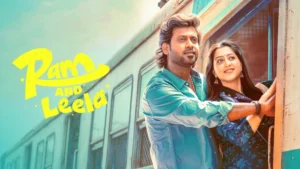
Once More (2026): A Familiar Tamil Romance That Leans on Its Leads
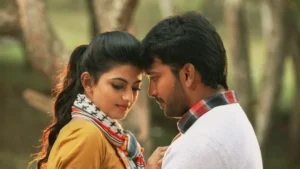
Raghu is introduced to us in pieces, a man folded inward, nursing a heartbreak that has calcified into routine. Then Anjali walks in, and the film’s central question announces itself with disarmingly simple directness: “Why do we marry?”
This is a movie that wears its intentions on its sleeve, a romantic drama built on the sturdy foundation of second chances and emotional healing. Whether that’s enough to justify your time depends entirely on how much patience you have for familiar beats executed with genuine warmth.
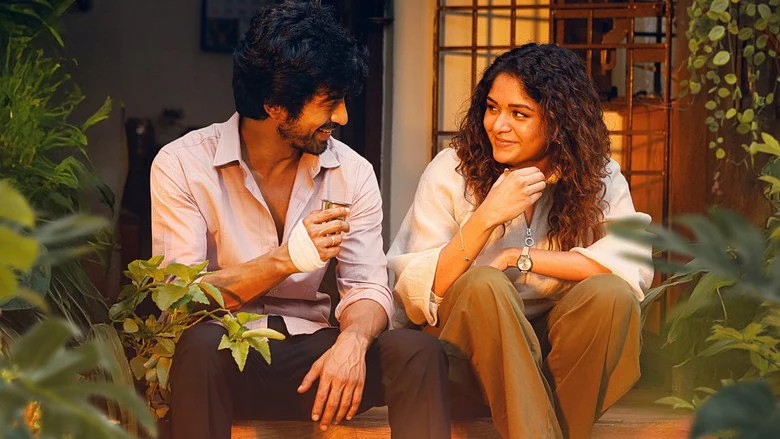
Arjun Das Proves He’s More Than Just Intensity
Arjun Das has built a career on coiled aggression, but here he’s asked to do something different. The early reaction coverage specifically flags his ability to balance “flamboyant and restrained” modes, and that contrast is the film’s most compelling element.
Watching him play grief and guardedness in the opening stretch, then slowly thaw under Anjali’s persistence, gives the romance its emotional spine. He’s not just reacting; he’s charting a character arc that feels earned even when the script around him gets predictable.
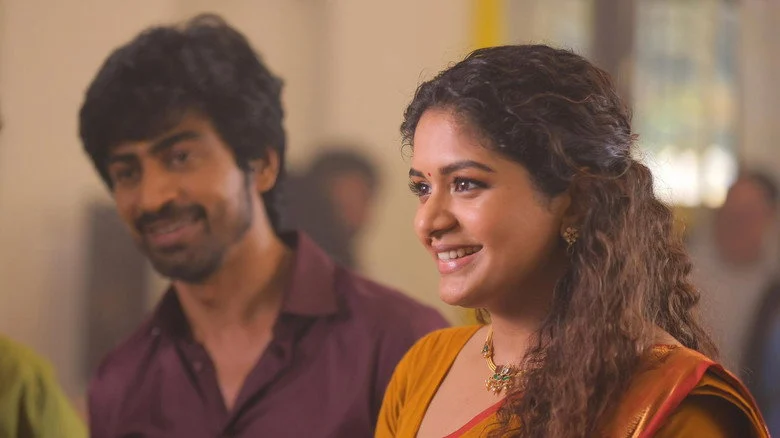
Aditi Shankar Steps Up, But The Screenplay Holds Her Back
The early reactions are unanimous on one point: this is Aditi Shankar’s best work so far. The role is described as “not easy, ” demanding emotional control that she delivers with visible commitment.
Director Vignesh Srikanth clearly knows how to frame his leads and draw out their chemistry. But the screenplay, for all its linear clarity, doesn’t give her enough friction to work with, the conflict stays situational rather than sharp, and her character’s agency dims whenever the plot needs to move forward.
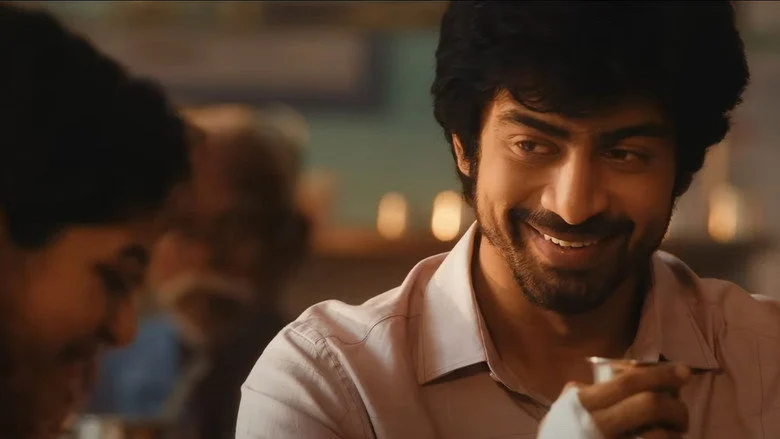
The Romance Genre Is Served With Familiar But Effective Tools
The film’s emotional engine is recovery, not instant attraction. Raghu’s grief at the start establishes a baseline that Anjali’s persistence must overcome, and that dynamic gives the romance a stakes-driven quality that pure meet-cutes lack. The triangular love story framing, flagged in early reactions, adds a layer of tension that keeps the middle stretch from sagging entirely.
Family and social-circle friction complicate the relationship in ways that feel authentic to Tamil cinema’s romantic traditions. The director understands that love stories need obstacles, and he stacks them with visible care, even if the resolutions arrive with predictable neatness.
Music and visual presentation carry significant weight here. The praise for both suggests that Srikanth and cinematographer Aravind Vishwanathan treated the film’s aesthetic as a co-star, using songs and frames to sell emotions the dialogue sometimes can’t. It’s not revolutionary craft, but it’s competent and occasionally lovely.
If you’re looking for more Tamil romance that leans on its leads, browse more Tamil Romance reviews.
The Supporting Cast Signals Intent, Even When Scenes Stay Thin
Sona Olickal’s debut is described as “promising, ” with early reactions pegging her as a talent to watch. In a film built around emotional contrasts, her presence suggests the director wanted fresh faces to offset the leads’ familiarity.
Dravid Selvam, Anusha Prabhu, and Chitra Lakshmanan round out the ensemble without leaving much trace in the available coverage. Their casting reads less as a collection of distinct characters and more as a support system for the central pair, functional, but rarely memorable.
Audience Reception And The Numbers Game
The IMDb score of 6.1 from 196 votes tells a modest story: this is a film that works for its intended audience without breaking through to wider acclaim. Trade analyst Ramesh Bala’s early 4/5 reaction, which framed it as a “romantic film with a triangular love story, ” captures the enthusiasm of those who connect with its wavelength.
There’s no verified box office data to measure commercial success against, and no controversy to fuel discourse. The film exists in a quiet middle space, appreciated by its fans, ignored by everyone else.
That’s not a fatal position for a romance of this scale, but it does mean the film’s legacy will rest entirely on how its leads are remembered. In that regard, Arjun Das and Aditi Shankar have done their jobs.
I found myself wishing the screenplay had trusted its performers more, giving them messier conflicts and less convenient resolutions. The craft is there; the courage to complicate things is not.
For viewers expecting a hard-edged action film or a clearly villain-driven plot, this will disappoint. For fans of the leads and devotees of Tamil romantic drama, there’s genuine warmth to be found.
Go for the performances, stay for the music, and accept that the story won’t surprise you. Once More earns a solid 3 out of 5, a competent, heartfelt romance that never quite transcends its own formula.
For a deeper look at how ratings can mislead, check out Beyond Ratings review.
If you’re curious about another Tamil director navigating patchy screenplays, Sanjeev verdict offers a similar case study.

Ankit Jaiswal is the Chief Author, covering Indian cinema and OTT releases with honest, no-filler criticism. An SEO strategist by background, he brings a research-driven approach to film writing, cutting through hype to tell you exactly what's worth your time.