Irumudi (2026): Ravi Teja’s Pilgrimage Drama Walks a Familiar Yet Faithful Path
The Ayyappa Deeksha pilgrimage begins with a man who carries a violent past like a wound that refuses to heal, his young daughter walking beside him through a landscape that demands surrender. This is the image that frames Irumudi, a father-daughter journey where the destination matters less than the distance travelled inward.
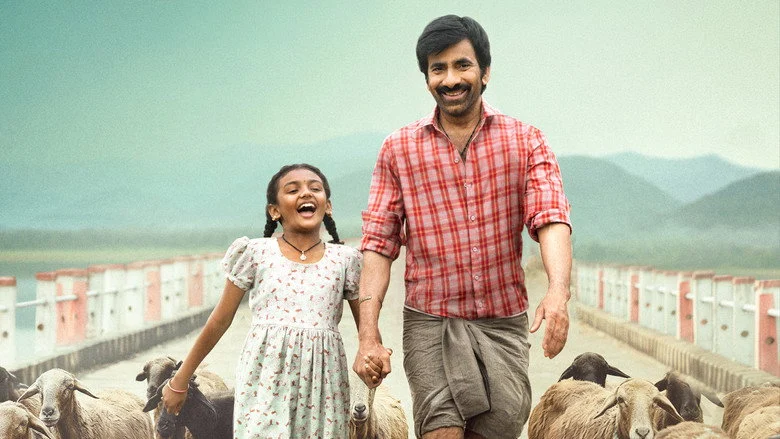
Ravi Teja trades mass for meaning in a measured transformation arc
Ravi Teja steps into a role that asks for introspection rather than fireworks, and the shift suits him. The opening stretch establishes his character as an alcoholic haunted by aggression, but the film’s real interest lies in how the pilgrimage strips those layers away.
His scenes with Baby Nakshathra carry the emotional weight, the unspoken guilt, the tentative reconnection, the way a child’s trust becomes the catalyst for change. It is a restrained performance, one that suggests Ravi Teja is actively seeking material that challenges his commercial persona.
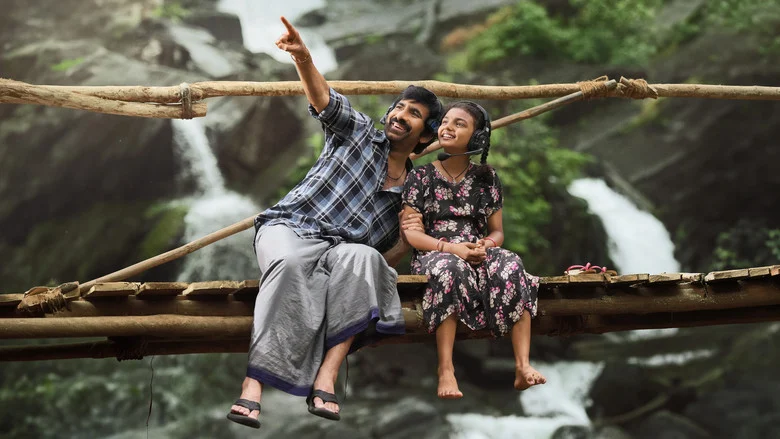
Shiva Nirvana’s screenplay trusts the journey over the destination
Shiva Nirvana, who writes and directs, demonstrates a clear authorial grip on the material. The linear structure, a man, a child, a road to faith, is deceptively simple, but it allows the drama to breathe without rushing toward set pieces.
Yet the film’s weakness lies in its predictability. The transformation arc follows a template familiar from countless redemption dramas, and the middle section occasionally meanders without the narrative tension needed to sustain momentum. One wishes the screenplay had trusted its own silences a little more.
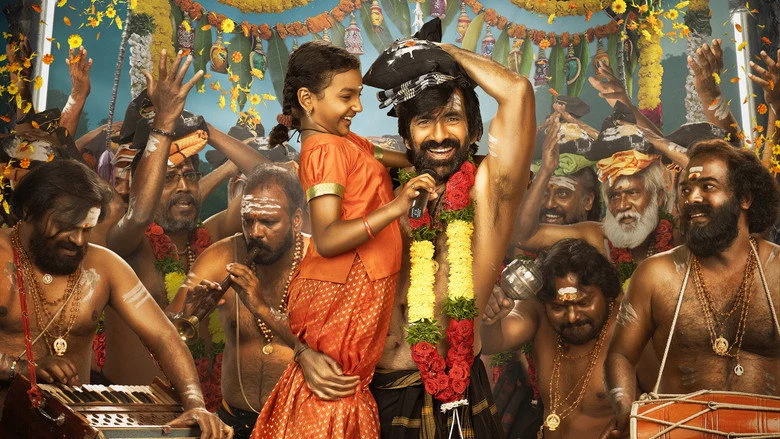
Genre execution: drama that leans on faith and family
The primary genre here is drama, and the film commits to it with sincerity. The Ayyappa Deeksha sequence is not merely a backdrop but a functional device, the rituals, the discipline, the shared hardship of the journey all mirror the protagonist’s internal struggle. The father-daughter dynamic is the emotional spine, and every conflict routes back to that relationship.
The pilgrimage setting does something quietly effective: it removes the noise of commercial action and forces the drama to work through small gestures. A glance, a hesitation, a hand held a moment too long, these become the film’s vocabulary. The violent past is never glamorised; it is referenced as a shadow that the pilgrimage must exorcise.
Where the film stumbles is in balancing its dual identities. The action elements feel grafted on, almost reluctant, as if the film is unsure whether to fully commit to its contemplative core or serve the mass audience. The result is a drama that works in fragments but never achieves the cumulative power it reaches for.
Supporting cast anchors the emotional world
Priya Bhavani Shankar brings a grounded presence to the family drama, her role functioning as the emotional counterweight to Ravi Teja’s turbulence. Even without scene-specific fireworks, her casting signals a deliberate choice toward substance over spectacle.
Sai Kumar, as always, elevates every frame he occupies, his gravitas lending the proceedings a weight that the younger cast cannot always generate. Ajay Ghosh and Swasika Vijay complete the ensemble with professional efficiency, while Baby Nakshathra deserves particular mention for holding her own against Ravi Teja in their shared scenes.
For those who appreciate Telugu cinema’s quieter explorations of faith and family, there is plenty more to Telugu Drama reviews worth exploring.
Box office trajectory and audience expectations
Advance booking figures reported by TrackTollywood showed ₹3.27 Cr gross for opening day shows on 17 August 2026, with live tracking later settling at ₹88.78L by 19 August. These numbers suggest a moderate opening, respectable for a non-festival release but not the kind of explosive start Ravi Teja’s mass entertainers typically command.
The audience profile skews toward family viewers and those seeking devotional drama, which means word-of-mouth will determine the film’s legs. The absence of a confirmed antagonist and the lack of a conventional villain structure may disappoint action-first crowds, but for the target demographic, this could be precisely the point.
Irumudi is a film that knows exactly who it is for. If you are seeking a pure action spectacle with rapid-fire set pieces, this will test your patience. But if you are willing to sit with a man’s slow reckoning with his past, framed through the quiet rituals of faith and the unbreakable bond with his daughter, there is genuine reward here. Watch it in a regular or premium large-format screen, where the pilgrimage landscapes can breathe.
Irumudi earns a measured 3 out of 5, a sincere drama that occasionally loses its footing but never its faith in its own story.
For another take on redemption through unconventional framing, Khalifa Part review offers a different kind of gamble.
And if tense, compact storytelling is your preference, Ananya s verdict delivers pure pressure in under an hour.

Ankit Jaiswal is the Chief Author, covering Indian cinema and OTT releases with honest, no-filler criticism. An SEO strategist by background, he brings a research-driven approach to film writing, cutting through hype to tell you exactly what's worth your time.