Dhamaal 4 (2026): Ajay Devgn s lifts key stretches, not the full runtime
The opening ensemble re-entry is a promise the film almost keeps, the core trio snapping back into their old rhythm, trading insults with the ease of men who’ve done this dance for nearly two decades. It’s a warm, familiar embrace for fans, and for the first hour, Dhamaal 4 feels like a comfortable reunion rather than a tired retread.
But comfort and complacency are close cousins, and Indra Kumar’s latest installment in the franchise walks a thin line between celebrating its legacy and coasting on it. The result is a film that knows exactly what its audience wants, and delivers it with the precision of a seasoned carnival barker, even when the tricks feel decidedly old.
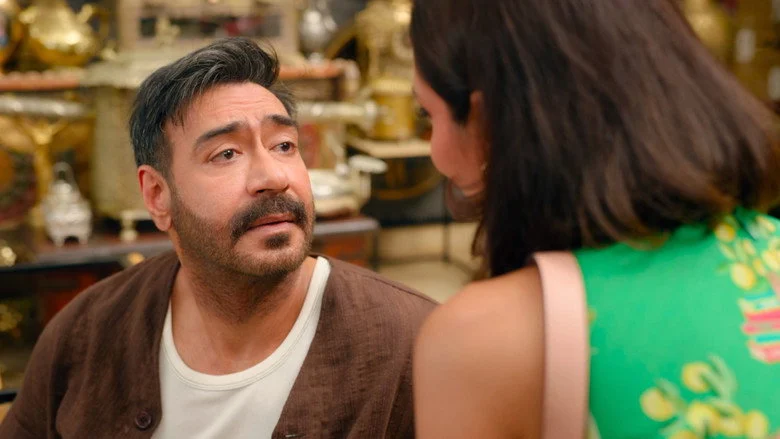
Ajay Devgn’s Dry Counterpoint Keeps the Ensemble Honest
Ajay Devgn’s Guddu Rastogi operates as the franchise’s gravity well. His dry, almost weary timing provides the necessary counterbalance to the chaos swirling around him, grounding scenes that might otherwise float away on pure volume.
Watch him in the mistaken-identity chase sequence, he barely raises his voice while Riteish Deshmukh and Arshad Warsi spiral around him. It’s a masterclass in reactive acting, even if the material beneath him is increasingly thin.
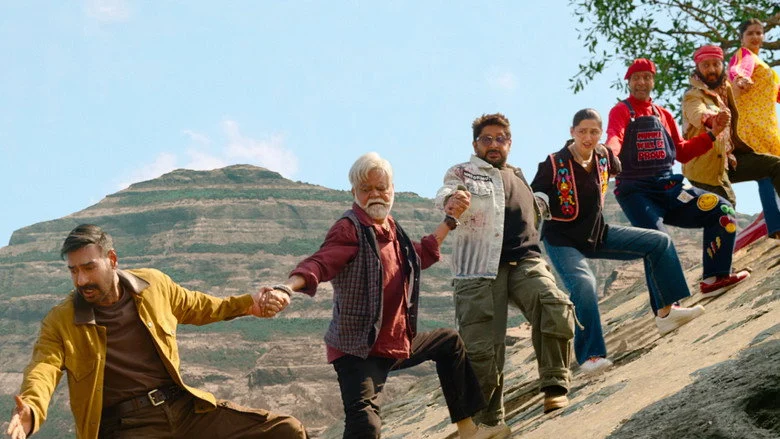
Riteish and Arshad: The Engine Room of Repetition
Riteish Deshmukh’s Lallan remains the franchise’s most exaggerated instrument, deployed in confrontation-heavy sequences that demand maximum physical commitment. His energy is undeniable, but the script gives him little new to play with, the same wide-eyed panic, the same frantic double-takes.
Arshad Warsi’s Adi, meanwhile, works in verbal rhythm and reaction shots, and those reactions remain the film’s most reliable laugh source. The problem is that we’ve seen these exact reactions before, in better-written contexts.
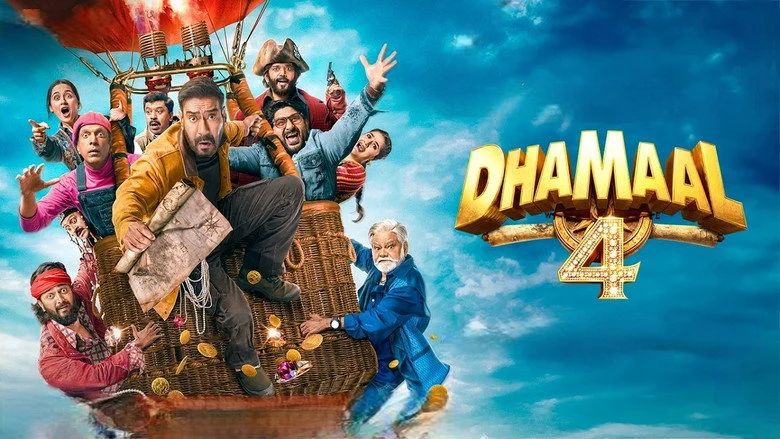
The Comic Engine: Misunderstanding as Architecture
Dhamaal 4’s primary comic engine is ensemble misunderstanding, and when it works, it works because the staging keeps multiple characters colliding in a single frame. The chase-comedy sequence built around rapid reversals shows the craft at its best, bodies moving, identities shifting, momentum building through pure physical escalation.
But the film’s reliance on reaction comedy over verbal sophistication becomes its ceiling. The stretched mid-film detours repeat the same gag pattern until the laughter curdles into recognition, and the second half’s pacing slows to a crawl precisely when the plot needs acceleration.
The climactic multi-party confrontation, where the main scheme unravels at once, tries to recapture the first hour’s energy. It’s competent staging, but the reversals depend on convenience rather than logic, and the payoff lands with a thud rather than a bang.
Jaaved Jaaferi and the Supporting Orchestra
Jaaved Jaaferi remains the ensemble’s secret weapon, his timing-based scenes receiving the most positive response in early audience reactions. His physical-comedy reactions in the multi-character exchanges are the film’s genuine highlight, a reminder of what this franchise can do when it trusts its performers.
Sanjay Mishra provides short comic relief beats with his usual dependable reactive energy, while Upendra Limaye moves the chase forward in supporting conflict scenes. Ravi Kishan’s antagonist Adhoora functions less as a threat and more as a plot-pressure device, a comic obstruction that triggers chases and misunderstandings rather than genuine tension.
Sanjeeda Sheikh and Esha Gupta appear in roles that signal the film’s commercial ambitions, though the gathered material offers little on their specific contributions beyond presence.
For those who want to see how this franchise’s chaos compares to other recent comedies, our Hindi Comedy reviews cover the spectrum from sharp satire to broad slapstick.
Direction and Screenplay: Continuity Over Craft
Indra Kumar maintains franchise continuity with competent broad ensemble staging, and several comic sequences move at a workable rhythm in the first half. His strength remains in keeping multiple characters visible and active within the frame, a skill honed across decades of mainstream comedy.
The weakness is structural: the screenplay leans heavily on familiar templates, with plot transitions that feel weakly motivated and reversals that arrive by convenience. The first half’s brisk, scene-driven energy gives way to a second half of repeated beats and reduced payoff, a structural imbalance that no amount of cast chemistry can fully compensate for.
The Box Office Verdict: Commerce Over Criticism
The reported first-week numbers tell a story the reviews can’t ignore: ₹167.77 crore India net and ₹230.06 crore worldwide gross, per Sacnilk tracking, securing a “Hit” verdict that speaks to the franchise’s enduring commercial pull. Taran Adarsh’s name appears in release-date coverage, adding trade credibility to the film’s theatrical dominance.
What this means for the franchise is clear: audience appetite for this specific brand of chaos remains undiminished, even as critical enthusiasm cools. The nostalgia factor is doing heavy lifting, and the film knows it.
Audience Response: Fans Get What They Came For
Fans responded predictably to the return of the core ensemble, with social sentiment favoring the slapstick timing in selected scenes and the franchise continuity that rewards long-time viewers. The complaints are equally predictable: overlong runtime, repetitive jokes, and a reliance on nostalgia instead of fresh writing.
This is a film for fans only, a mass and family audience that values the comfort of familiar faces over the surprise of new ideas. Viewers looking for tight writing or subtle humor should look elsewhere entirely.
Should You Watch It?
If you’ve laughed at every Dhamaal installment, you’ll find enough here to justify a regular theatrical outing, the first hour delivers the ensemble chemistry you’ve been missing. But if you’re hoping for evolution, for a franchise that learns from its own formula, you’ll leave with the same complaint you’ve had since Total Dhamaal: this chaos has become a well-rehearsed routine.
For a sharper look at how another director handles similar comic chaos, check out Karathey Babu review and its no-frills approach to ensemble dynamics.
Dhamaal 4 earns a generous 2.5 out of 5, a film that knows its audience perfectly but has forgotten how to surprise them, delivering commerce over craft with professional efficiency.
For a different take on ensemble comedy with stronger writing, Your s verdict shows how narrative grip can elevate familiar material.

Ankit Jaiswal is the Chief Author, covering Indian cinema and OTT releases with honest, no-filler criticism. An SEO strategist by background, he brings a research-driven approach to film writing, cutting through hype to tell you exactly what's worth your time.