Ikka (2026): Sunny Deol and stands out while the narrative loses grip
The gavel hasn’t even landed when Arjun Mehra locks eyes with Shauryaman Gaur across the aisle. That first courtroom confrontation carries the voltage of two prize fighters circling before the bell. Sunny Deol’s restrained fury meets Akshaye Khanna’s coiled menace, and for a moment, the film’s familiar scaffolding disappears.
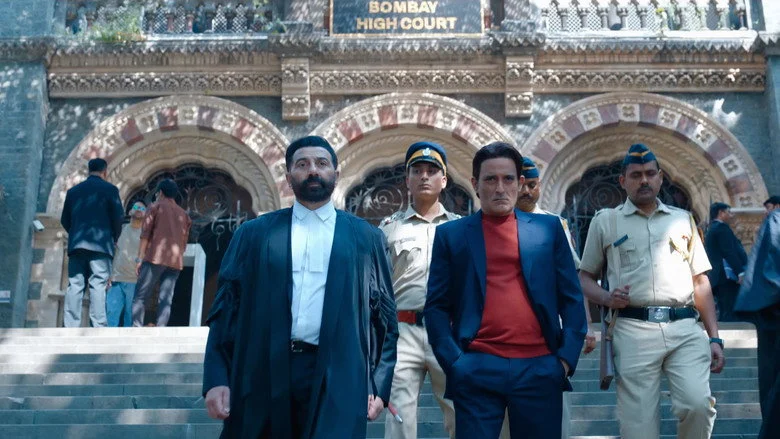
Sunny Deol Carries the Moral Weight Like a Man Holding a Live Wire
Deol plays Ikka as a man whose principles are being dismantled in real time. The emotional burden of protecting his daughter while defending his ethics gives him something meatier than his usual action-hero register. His best moments arrive in silence, the pause before he answers a prosecutor’s jab, the slight tremor when family and law collide.
Critics have noted that his performance anchors the film’s dramatic core. The Rotten Tomatoes aggregate of 5.0 suggests a divided response, but even detractors concede Deol holds the screen with a lived-in gravity.
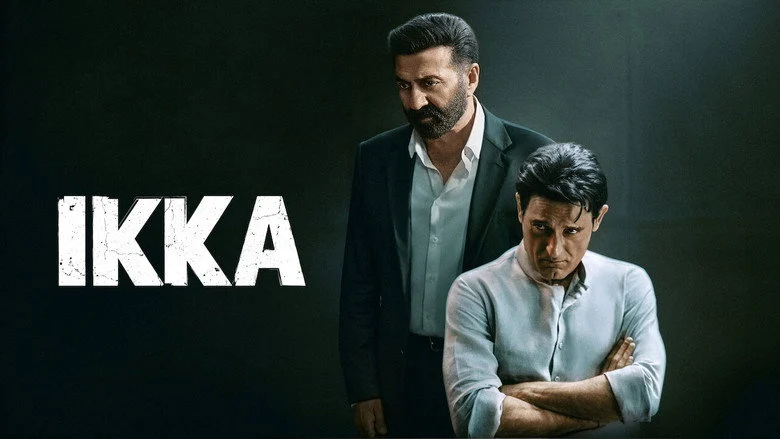
Akshaye Khanna’s Controlled Antagonism Is the Film’s Sharpest Weapon
Khanna’s Shauryaman Gaur is not a shouting villain. He operates in whispers, legal loopholes, and the quiet confidence of a man who knows the system’s weak points. His courtroom exchanges with Deol are the film’s oxygen, every verbal parry lands with theatrical precision.
What makes Khanna effective is his refusal to overplay. He lets the camera catch the micro-expressions, the almost-smile when he thinks he’s won. It’s a performance built on restraint, and it gives the film its only genuine unpredictability.
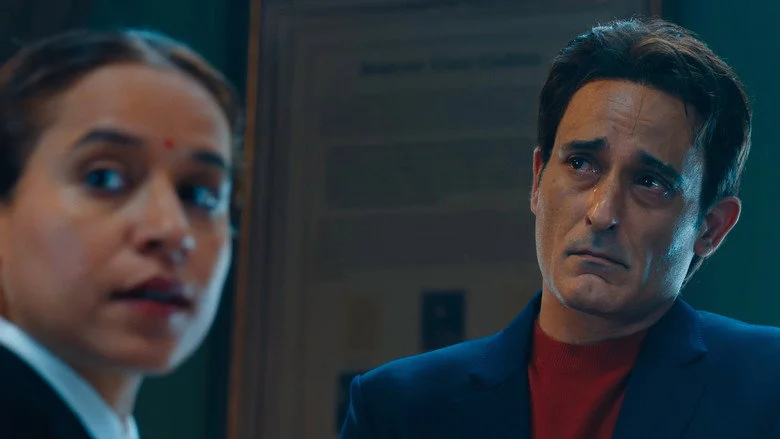
Courtroom Drama That Leans on Confrontation Over Procedure
The genre execution here tilts heavily toward drama rather than legal realism. Siddharth P. Malhotra directs the courtroom as a stage for personality clashes, not procedural nuance. The arguments between Deol’s Arjun and Tillotama Shome’s prosecutor Madhura Banerjee carry weight, but they rarely feel like real legal strategy.
This approach works when the film trusts its actors. The face-offs crackle with theatrical energy, and the moral dilemma at the center, justice versus family, gives the drama genuine stakes. But the thriller element remains undercooked; there’s little tension outside the courtroom walls.
The screenplay, credited to Althea Kaushal and Mayank Tewari, follows a linear path that seasoned genre fans will map within the first act. The film’s dated tone, flagged by multiple reviews, surfaces in its over-dramatic scoring and predictable beats.
Supporting Cast Builds the Stakes Around the Central Duel
Dia Mirza brings quiet dignity to Avantika Mehra, grounding the family strand that gives Deol’s moral crisis its urgency. Her scenes are brief but essential, she represents the domestic cost of Ikka’s legal war. Tillotama Shome, as the public prosecutor, adds procedural credibility with her sharp, no-nonsense delivery.
Sanjeeda Sheikh’s special appearance as Gauri Gaur connects the antagonist’s family network to the larger conflict. Shishir Sharma, as Harshvardhan Gaur, provides a cold patriarchal presence that explains Khanna’s entitlement. These supporting turns don’t steal scenes, but they build the world around the central duel.
If this courtroom showdown interests you, there’s plenty more where that came from. Browse our Hindi Thriller reviews for similar face-offs.
Audience Reception Points to a Familiar but Satisfying Formula
Audience sentiment mirrors critical response, praise for the lead performances and courtroom confrontations, complaints about predictability and over-dramatic tone. The film knows exactly what it is: a two-hander designed around its stars. For fans of Deol and Khanna, that’s enough. For those seeking freshness in the genre, it will feel like a rerun.
The absence of any controversy or political angle means the film exists purely as entertainment. That’s neither a compliment nor a criticism, it’s simply what the market ordered. A 2-hour-20-minute runtime keeps the proceedings tight, though the pacing stumbles in the middle stretch where the legal arguments repeat themselves.
There’s a certain comfort in watching two veterans play a familiar tune well. Ikka doesn’t reinvent the courtroom drama, but it delivers the confrontation its poster promises. If you’re a fan of Jolly LLB-style legal battles, this scratches that itch with more star power and less wit. Watch it for Khanna’s villainy and Deol’s paternal anguish, they carry the film past its flaws. A regular streaming viewing will do just fine.
Ikka (2026) earns a modest 2.5 out of 5, a watch for its lead performances, a skip for its predictable screenplay. The film proves that star chemistry can elevate even the most familiar legal terrain.
For another take on a courtroom drama built around a strong lead, check out Dhamaal 4 review.
If you’re drawn to films where a single performer anchors the narrative, Karathey Babu verdict offers a similar dynamic.

Ankit Jaiswal is the Chief Author, covering Indian cinema and OTT releases with honest, no-filler criticism. An SEO strategist by background, he brings a research-driven approach to film writing, cutting through hype to tell you exactly what's worth your time.