Kalpana Aur Yatharth: Salil Singh’s Dual Role Gamble Yields A Haunting, Unresolved Mystery
Salil Singh writes, directs, and stars in a film that treats a missing wife as both a plot engine and a philosophical problem. The result is a drama that refuses the comfort of clean answers.

A Search That Refuses To Become A Procedural
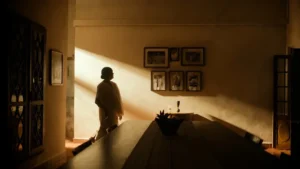
Yatharth’s pursuit of Kalpana begins not with a crime scene but with an absence. The film establishes early that this is not a detective story wearing emotional clothing; it is an emotional story wearing detective clothing, and that inversion matters.
Singh’s screenplay moves through what the film calls an “unreal world, ” a phrase that could mean anything or nothing depending on execution. Here, it means the boundaries between Yatharth’s memory and his present tense blur with deliberate cruelty.
Where a lesser film would introduce a sympathetic confidant to explain the rules, this one withholds. The mystery is not who took Kalpana or why she left, but whether Yatharth’s version of events can be trusted at all.
When The Filmmaker Casts Himself As The Unreliable Center
Singh the actor plays Yatharth with a stillness that borders on vacancy. His face registers not grief but its aftermath, the flat affect of someone who has been searching so long that searching has become his only identity.
This is a performance built on physical restraint rather than emotional display. In scenes where Yatharth confronts the possibility that Kalpana may never have existed as he remembers her, Singh’s jaw tightens but his eyes stay dry, a choice that reads as shock rather than numbness.
The actor-filmmaker’s dual role creates an unusual dynamic. There is no director standing outside the frame to judge Yatharth’s reliability, only Singh watching himself from both sides of the lens. The performance foil here is not another actor but the film’s own structure.
Isha Singh Chauhan And The Weight Of Absence
Isha Singh Chauhan appears as Kalpana, though “appears” is the operative word for a character whose presence is primarily felt through Yatharth’s recollection. Her scenes carry the burden of being both memory and evidence.
In the film’s most disquieting sequences, Chauhan plays Kalpana with a warmth that feels deliberately overstated. She smiles too easily, touches Yatharth’s arm too often. The performance invites the audience to wonder whether this is love remembered or love invented.
Whether this is a directorial instruction or a performance choice remains ambiguous, and that ambiguity serves the film’s larger design. Chauhan’s Kalpana is a woman who may be a ghost, a liar, or simply a wife who left.
A Reality-Blurring Structure That Tests Audience Patience
The screenplay’s chronology resists easy mapping. Scenes dissolve into one another without clear temporal markers, and location shifts happen without establishing shots to orient the viewer.
This is not confusion for its own sake. The film’s grammar mirrors Yatharth’s psychological state, where the difference between a memory and a hallucination is measured in seconds rather than logic.
But the strategy has diminishing returns. By the second half, the refusal to ground the audience in any stable reality begins to feel less like mystery and more like evasion. A film can withhold answers; it cannot withhold stakes.
The Unanswered Question As The Point
Somewhere in the film’s final movement, the search for Kalpana reaches a kind of terminus. Whether Yatharth finds her, or finds only another version of his own delusion, is left deliberately unresolved.
This is the film’s most radical choice and its most frustrating. The ambiguity is not the problem; the problem is that the ambiguity arrives without sufficient emotional preparation.
The ending asks the audience to accept that the journey itself was the answer, a conclusion that works only if the journey has been rendered with enough specificity to earn that abstraction. Here, the specificity is uneven.
What remains is a film that understands obsession as a form of architecture, a structure built from absence and maintained by refusal. Yatharth does not find Kalpana because finding her would mean the search is over, and the search is all he has left.
Rating: 3 / 5
Kalpana Aur Yatharth is not a film that solves its mystery. It is a film that asks whether the mystery was ever about Kalpana at all, or whether she was simply the name Yatharth gave to his own inability to stop looking. The answer, like the woman, remains just out of frame.
This stylistic discipline reflects a welcome evolution across contemporary hindi dramas, prioritizing character conviction over easy commercial formulas.

Ankit Jaiswal is the Chief Author, covering Indian cinema and OTT releases with honest, no-filler criticism. An SEO strategist by background, he brings a research-driven approach to film writing, cutting through hype to tell you exactly what's worth your time.