Chand Mera Dil (2026): Ananya Panday s stands out while the narrative loses grip
Aarav and Chandni meet at engineering college in Hyderabad and fall into an intense, emotionally dependent romance that feels inevitable and all-consuming. Within minutes, their relationship becomes the entire world, until an unplanned pregnancy forces both characters to confront the gap between what love feels like and what love demands when adulthood arrives unannounced.
Vivek Soni’s *Chand Mera Dil* is fundamentally a performance film, one that succeeds or fails entirely on whether its lead pair can sustain emotional credibility through a relationship arc that moves from idealized campus bonding to the grinding reality of responsibility, separation, and eventual reconciliation. The screenplay by Soni, Tushar Paranjape, and Akshat Ghildial understands this dependency, almost every scene is built around whether we believe Aarav and Chandni’s connection can survive the collision between romance and adult life.
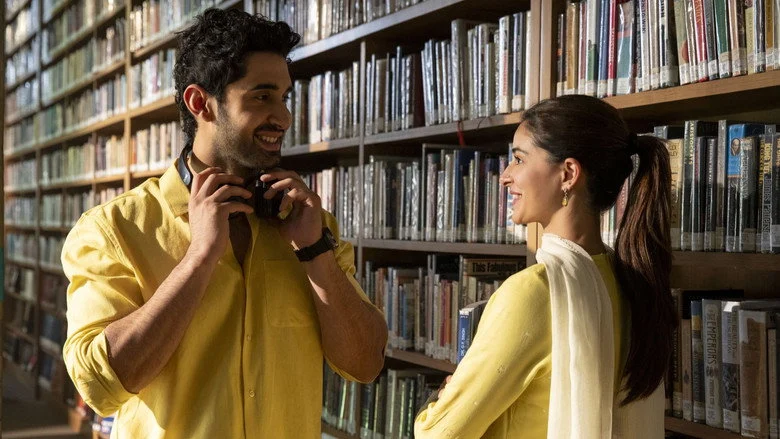
Ananya Panday’s Chandni carries the film’s emotional weight
Panday’s performance in the reunion and separation sequences reveals the film’s strongest asset. She plays Chandni not as a passive romantic lead but as a woman actively negotiating the gap between what she felt in college and what she’s learned about herself through motherhood, estrangement, and quiet growth. Her vulnerability in the mid-film relationship conflict, where the couple battles over priorities and identity, grounds the melodrama in something resembling lived experience rather than pure romantic formula.
The problem is that the screenplay around her often overstates the emotional volatility, turning legitimate adult conflict into repetitive cycles of hurt and reconciliation.
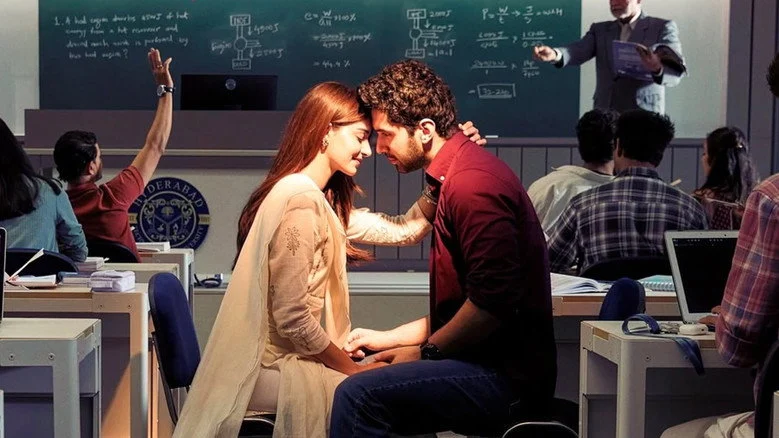
Lakshya Lalwani’s possessiveness defines the film’s emotional shape
Lalwani’s Aarav is positioned as an emotionally intense character whose need to control and protect Chandni becomes the film’s central tension. In the opening campus sequences, this intensity reads as romantic urgency. By the second half, after separation and co-parenting complications, it becomes a liability that forces the screenplay to justify why these two should reunite at all.
Lalwani plays this register consistently, but the character itself is built on an emotional dependency that some viewers will read as toxic rather than tender.
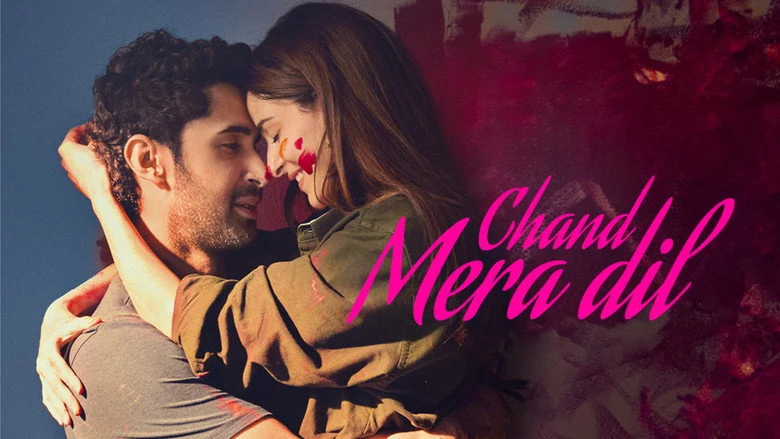
The romantic-drama structure depends on familiar turning points
The unplanned pregnancy is the film’s primary plot accelerator, a narrative device that moves the story from youthful romance to adult responsibility in a single act. It’s effective as a mechanism, but it’s not original. The film follows a conventional romantic-drama arc: meet, connect, separate through external pressure, reconnect through emotional growth. Each beat lands where the audience expects it to land.
The reunion climax was the most positively received moment because it rejects a tragic ending. Instead of a final separation, Aarav and Chandni choose to restart the relationship with new maturity. This choice feels earned through the characters’ individual growth rather than imposed by sentiment.
Where the film stumbles is in the middle section, where the couple’s conflict is sustained through multiple adult pressures, marriage, parenthood, stalled career ambitions, family expectations, without introducing fresh dramatic complications. The repetition may test viewer patience, particularly for audiences expecting a lighter romantic experience.
For those interested in how Hindi cinema explores relationship transformation beyond college romance, Hindi drama reviews remain a useful guide to the landscape.
The ensemble remains underdeveloped beyond the lead pair
Aastha Singh appears in the cast listing, though her specific role and impact on the narrative remain unclear from available material. The film’s structure leaves little room for supporting characters to develop meaningful arcs, everyone except Aarav and Chandni exists in service to the couple’s emotional journey rather than as independent dramatic forces.
This narrowness is both a strength and a limitation. It sharpens focus on the lead performances but reduces the film’s ability to explore how the couple’s crisis affects or is affected by their broader social world.
The ending avoids tragedy but embraces emotional weight
Vivek Soni’s direction throughout the film is emotionally direct and unafraid of sustained tension. He tracks the relationship’s escalation from campus setup through adult complication with clear narrative intent. What the film lacks is visual or stylistic distinction, it relies almost entirely on performance and dialogue to justify its runtime of two hours and twenty-six minutes.
The screenplay’s primary weakness is its dependence on familiar romantic-drama beats. There’s no real antagonist, no external villain forcing the couple apart, only immaturity, family pressure, and the collision between individual ambition and shared responsibility. This is honest material, but it’s not surprising.
*Chand Mera Dil* is a film for viewers who believe that cinema’s most important responsibility is to capture how love transforms when it meets real life. Panday’s nuanced performance and the film’s willingness to explore adult compromise give it substance. But the repetitive emotional conflict and reliance on familiar melodrama will test patience in the second half. Watch it in regular theatrical format if you value dialogue and intimate emotional scenes; it translates adequately to OTT but loses something in translation from the couple-focused framing that dominates the compositions.
Ananya Panday’s mature performance and the film’s exploration of romance beyond college gives *Chand Mera Dil* moments of real weight, but familiar melodrama and emotional repetition prevent it from transcending its genre formula, a solid 3 out of 5 that succeeds more through performance than innovation.
The same blend of emotional intensity and romantic vulnerability that defines this film also drove the ensemble dynamics in Pati Patni review.
Both *Chand Mera Dil* and Maa Behen verdict explore how personal relationships fracture under the weight of societal and family pressure.

Ankit Jaiswal is the Chief Author, covering Indian cinema and OTT releases with honest, no-filler criticism. An SEO strategist by background, he brings a research-driven approach to film writing, cutting through hype to tell you exactly what's worth your time.